
Fitness fatness links queried
Wednesday September 5th, 2012
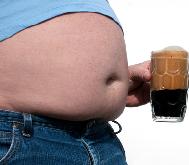
Many people who are obese have no greater risk of heart disease or cancer than people of normal weight, researchers said today.
 Only
about half of obese people show signs of problems which will lead to heart
disease and serious illness, according to the analysis.
Only
about half of obese people show signs of problems which will lead to heart
disease and serious illness, according to the analysis.
A second piece of research out today highlights doubts about the value of shedding weight after a heart attack - a phenomenon known as "the obesity paradox".
Both are published today in the European Heart Journal.
Experts said the findings should not lull people into ignoring the risks of obesity.
Amy Thompson, of the British Heart Foundation, said: "These studies remind us that it is not always your weight that’s important, but where you carry fat and also how it affects your health and fitness.
"It is particularly important to be aware of your weight if you are carrying excess fat around your middle. The fat cells here are really active, producing toxic substances that cause damage which can lead to heart disease."
Spanish researchers looked at people who are "metabolically healthy" but obese. Dr Francisco Ortega of the University of Granada, Spain, and colleagues tested whether this group have a higher fitness level than obese and "metabolically abnormal" people.
They recruited 43,265 men and women whose fitness was assessed via treadmill tests and body fat percentage measured. Participants' metabolic health was decided by presence or absence of metabolic syndrome.
Results showed that metabolically healthy but obese participants (who made up just under half of the obese participants) had significantly better fitness than metabolically abnormal obese participants.
They also had a 30 to 50 per cent reduced risk of death, heart disease and cancer, putting them level with metabolically healthy normal-weight participants.
Dr Ortega writes that being metabolically healthy but obese "is a benign condition".
A second study, in the same journal, looked at the obesity paradox - the idea that, once someone has developed heart disease, they have a reduced risk of dying if they are overweight or obese, while underweight and normal weight patients have an increased risk.
Dr Oskar Angeras of the University of Gothenburg, Sweden, and team analysed figures on over 64,000 patients and found evidence to support the paradox.
"We believe that no evidence exists that proves weight reduction in itself has a positive prognostic value after acute coronary syndromes. Actually some evidence suggests that weight loss after acute coronary syndromes might in fact have a negative effect."
The intriguing metabolically healthy but obese phenotype: cardiovascular prognosis and role of fitness. Ortega, F. B. et al. European Heart Journal September 5 2012 doi:10.1093/eurheartj/ehs174
Evidence for obesity paradox in patients with acute coronary syndromes: A report from the Swedish Coronary Angiography and Angioplasty Registry. Angeras, O. et al. European Heart Journal September 5 2012 doi:10.1093/eurheartj/ehs217
Tags: Diet & Food | Europe | Fitness | Heart Health | UK News
 Printer friendly page