
The gene that did for Henry, Anne and Katherine
Monday March 7th, 2011
Six wives and two beheadings gave the English king Henry VIII just one sickly male heir - and now researchers say they can explain why.
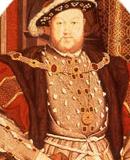 A
new theory suggests the tyrannical English king had a rare blood group,
which might have triggered a further genetic disorder.
A
new theory suggests the tyrannical English king had a rare blood group,
which might have triggered a further genetic disorder.
The king probably carried the Kell antigen, according to the new theory.
The antigen would explain why those of his wives who had children only managed one child. After the first child, a woman will find most subsequent pregnancies are destroyed by antibodies to Kell produced the first time round.
Bio-archaeologist Catrina Banks Whitley identified that the six wives suffered numerous miscarriages, preventing his first two producing the male heir the king expected.
His eldest daughter Mary was her mother's fifth pregnancy - but some Kell children will survive if they inherit the Kell gene from the parent.
Henry's desire to divore Mary's mother, Katherine of Aragon, led him to break with the Catholic church.
She says it is likely that Henry then developed McLeod syndrome, which is associated with Kell positive blood.
This would have caused leg ailments and symptoms similar to Huntington's disease - including "psychiatric abnormality".
Including his mistresses, the king's partners had at least 11 pregnancies - with just four children surviving pregnancy, the researchers say.
The researchers trace the pattern of pregnancy problems backed to the king's maternal great-grandmother Jacquetta of Luxembourg.
Ms Banks Whitley, of Southern Methodist University, Dallas, USA, has reported her findings in The Historical Journal.
She writes: "The pattern of reproductive failure among Jacquetta's male descendants, while the females were generally reproductively successful, suggests the genetic presence of the Kell phenotype within the family."
Tags: Childbirth and Pregnancy | General Health | Genetics | UK News
 Printer friendly page