
Different foods are linked to risks of different types of stroke, the largest study of its kind to date has revealed.
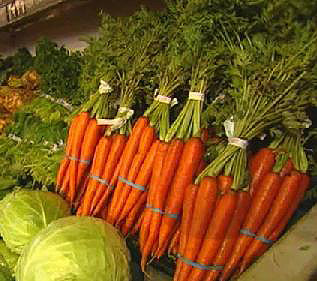 A study of 418,000 people in nine European countries has found that while high intakes of fruit, vegetables, fibre, milk, cheese or yoghurt were each linked to a reduced risk of ischaemic stroke, there was no significant association with haemorrhagic stroke.
However, high consumption of eggs was associated with an increased risk of haemorrhagic stroke, but not with ischaemic stroke.
The findings of the observational study, the first to investigate ischaemic stroke and haemorrhagic stroke separately, are published in the latest edition of European Heart Journal.
First author Dr Tammy Tong, nutritional epidemiologist at the Nuffield Department of Population Health, University of Oxford, UK, said: “Our study also highlights the importance of examining stroke subtypes separately, as the dietary associations differ for ischaemic and haemorrhagic stroke, and is consistent with other evidence, which shows that other risk factors, such as cholesterol levels or obesity, also influence the two stroke subtypes differently.”
The total amount of fibre that people ate was associated with the greatest potential reduction in the risk of ischaemic stroke. Every 10g more intake of fibre a day was associated with a 23% lower risk, equivalent to about two fewer cases per 1000 of the population over 10 years.
Fruit and vegetables alone were associated with a 13% lower risk for every 200g eaten a day, while no foods were linked to a statistically significant higher risk of ischaemic stroke.
The European Society of Cardiology (ESC) and the World Health Organization Regional Office for Europe recommend that individuals should eat at least 400g of fruit and vegetables a day; the ESC also recommends 30-45g of fibre a day.
The researchers also ascertained that for every extra 20g of eggs consumed a day there was a 25% increased risk of haemorrhagic stroke, equivalent to 0.66 extra cases per 1000 of the population over 10 years.
Participants from the European Prospective Investigation into Cancer and Nutrition (EPIC) study between 1992 and 2000 were recruited for the study.
They completed questionnaires about their diet, lifestyle, medical history and socio-demographic factors, and were followed up for an average of 12.7 years. During this time, there were 4281 cases of ischaemic stroke and 1430 cases of haemorrhagic stroke.
Tong T, Appleby P, Key T et al. The associations of major foods and fibre with risks of ischaemic and haemorrhagic stroke: a prospective study of 418,329 participants in the EPIC cohort across nine European countries. European Heart Journal 24 February 2020; doi:10.1093/eurheartj/ehaa007
https://academic.oup.com/eurheartj/article-lookup/doi/10.1093/eurheartj/ehaa007
Leave a Reply