
British scientists have unveiled new techniques that enable them to study the interactions of cancer cells at cellular level.
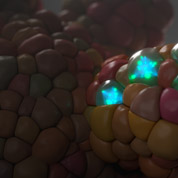 One project, at University College London, involved the creation of organoids, which were used to develop techniques to analyse the activity of many signalling molecules interacting at moments in time.
In a test on a million bowel cancer cells, scientists simultaneously detected 28 key signalling molecules across six different cell types. This suggested that the cancer cells had rewired the tissue’s normal signalling networks.
The process involved modifying mass cytometry, leading to the nebulising of the cells and the use of a magnetic field to separate out signalling molecules. The research, backed by Cancer Research UK, was reported in Nature Methods last night.
Researcher Dr Chris Tape said: “Organoids are already revolutionising cancer research by allowing us to test whether experimental new drugs are effective on lifelike models of tumours. But crucially, this new technique helps scientists to understand why a treatment works or not, by revealing in unprecedented detail how cells are talking to each other."
* In a second study scientists unveiled one of the "most detailed maps of breast cancer ever".
The maps, developed at the charity’s Cambridge Institute, shows the tumours at a resolution higher than the level of a cell. It can enable doctors to see how the "landscape" of the cancer, with tumour cells, immune cells and connective tissues, varies between tumours and is linked to genetic make-up, the scientists say.
The work was reported in Nature Cancer.
Researcher Dr Raza Ali said: “At the moment, doctors only look for a few key markers to understand what type of breast cancer someone has. But as we enter an era of personalised medicine, the more information we have about a patient’s tumour, the more targeted and effective we can make their treatment.”
Cell-Type Specific Signaling Networks in Heterocellular Organoids. Nature Methods 17 February 2020 http://dx.doi.org/10.1038/s41592-020-0737-8
Imaging mass cytometry and multi-platform genomics define the phenogenomic landscape of breast cancer. Nature Cancer 17 February 2020
Leave a Reply