
British scientists have successfully engineered a tropical disease vaccine that does not need refrigeration, it was announced last night.
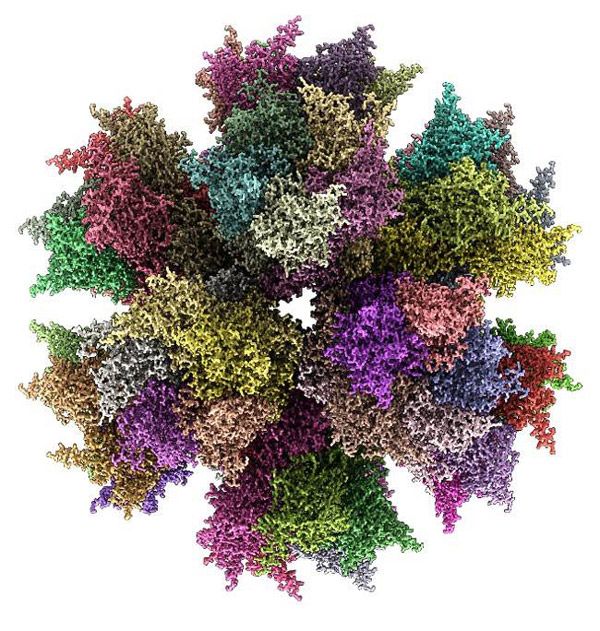 Tests on the Chikungunya vaccine are "exceptionally promising", scientists at Bristol University said.
The vaccine has been designed using a synthetic protein scaffold and details were unveiled in the journal Science Advances.
The ground-breaking research involved cryo-electron microscopy and massive parallel computing to process the results. This was achieved using a high-performance cloud computing infrastructure provided by computer company Oracle.
The subsequent vaccine has now been successfully tested on laboratory animals, the researchers say.
Imre Berger, director of Bristol’s Max Planck-Bristol Centre for Minimal Biology, said: “This particle has a very flexible, exposed surface that can be easily engineered. We figured that we could insert small, harmless bits of Chikungunya to generate a virus-like mimic we could potentially use as a vaccine.”
“We were thoroughly delighted. Viruses are waiting to strike, and we need to have the tools ready to tackle this global threat. Our vaccine candidate is easy to manufacture, extremely stable and elicits a powerful immune response. It can be stored and transported without refrigeration to countries and patients where it is most needed.
"Intriguingly, we can now rapidly engineer similar vaccines to combat many other infectious diseases just as well.”
Fellow researcher Pascal Fender, of the French National Centre for Scientific Research in Grenoble, said: “We were working with a protein that forms a multimeric particle resembling a virus but is completely safe, because it has no genetic material inside.
"Completely by chance, we discovered that this particle was incredibly stable even after months, without refrigeration.”
Vragniau et al. Synthetic self-assembling ADDomer platform for highly efficient vaccination by genetically-encoded multi-epitope display. Science Advances 25 September 2019
Leave a Reply