
The practice of removing extra toes and fingers from polydactylic babies should be reconsidered in the light of new findings about them, British researchers say today.
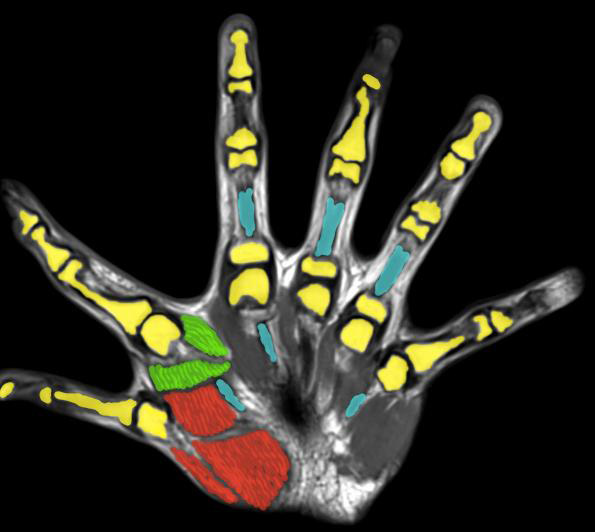 Scientists in London, Freiburg, Germany, and Lausanne, Switzerland, have been studying polydactylic people to find clues about how robotic hands might be linked to the brain.
Research, published in Nature Communications, shows that the extra digits have areas of the brain dedicated to their control.
The condition is said to affect as many as one in 500 babies.
The findings come from research on two people who have retained six fingers on their hands, a woman of 52 and her son, aged 17. The researchers say the six-fingered volunteers were often better at tasks, including video games, than other people. This included being able to tie shoelaces with one hand.
Researcher Professor Etienne Burdet, of Imperial College, London, said: "The polydactyl individual’s brains were well adapted to controlling extra workload, and even had dedicated areas for the extra fingers. It’s amazing that the brain has the capacity to do this seemingly without borrowing resources from elsewhere.”
Fellow researcher Professor Carsten Mehring, of Freiburg University, said: "In our study, the extra digits have been trained in the subjects since birth. This does not necessarily mean that similar functionality can be achieved when artificial limbs are added on later in life.
"Yet, people with polydactyly provide a unique opportunity to analyse the neural control of extra limbs and the possibilities of to boost sensorimotor control."
Augmented manipulation ability in humans with six fingered hands. Nature Communications 3 June 2019
Leave a Reply