
A £1 million fund to develop robotics and artificial intelligence (RAI) technologies could pave the way for new methods of delivering healthcare and emergency care, developers say today.
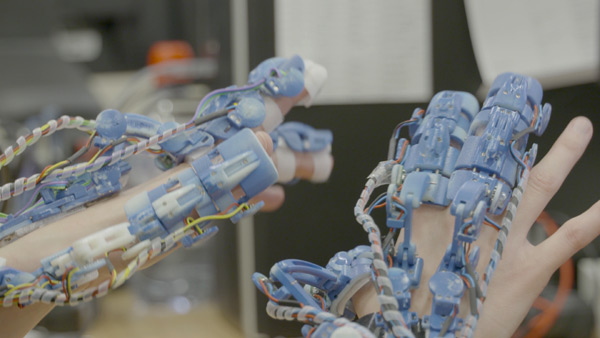 The money has been awarded by Engineering and Physical Sciences Research Council (EPSRC) to The Edinburgh Centre for Robotics (ECR), a joint initiative between Heriot-Watt University and the University of Edinburgh, UK, and will see the development of four new robots, including a TIAGo (Take It and Go) service robot, which could become central to delivering care package in homes and care facilities.
Researchers at the ECR’s ROBOTARIUM will establish ways of incorporating robots into the healthcare system, including supporting healthcare professionals and family carers.
Sethu Vijayakumar, Professor of Robotics at the University of Edinburgh and co-director of the Edinburgh Centre for Robotics, said the £1m award will also enable the creation of living labs at ROBOTARIUM, with mock-ups for hospital and collaborative manufacturing automation.
“This award will enable us to further address many of the challenges facing industry and society today,” he said.
“We will be investigating how Robotics and Autonomous Systems (RAS) can reduce cost and operator risk and improve productivity when applied to the inspection, repair and maintenance of critical infrastructure such as nuclear, offshore energy and space.”
Professor David Lane from Heriot-Watt University, said: “Part of this investment will support our research into affordable, robot-assisted surgical and diagnostic devices that can benefit the NHS, as well as be used as solutions for global health challenges.
“We use our living labs in the ROBOTARIUM and the real world to turn these research ideas into economic success stories. Robots are set to revolutionise our economy and society over the next 20 years as they start to work for us and beside us, assisting us and interacting with us.”
The Heriot-Watt team includes colleagues from the Ocean Systems Laboratory (part of the Edinburgh Centre for Robotics) and the Smart Systems Group.
* Last week researchers in Bristol unveiled their plans to develop exoskeletons as part of new robotic minimally invasive surgery systems.
Leave a Reply