
Deep brain stimulation could help the mental and physical health of people with chronic anorexia nervosa, a report published today has found.
 A small Canadian study of 16 women, aged 21 and 57, has suggested that the intervention is safe and could help improve some symptoms of anorexia, but researchers say more studies are needed.
Each of the participants had an average BMI of 13.8 and was selected because other treatments had failed and they were at risk of early death.
Writing in The Lancet Psychiatry, study author, Professor Andres Lozano, of the University of Toronto, Canada, described how the women underwent deep brain stimulation to examine how the procedure affected their BMI, mood, anxiety and wellbeing.
The electrodes were placed into their subcallosal cingulate, an area in the centre of the brain that alters serotonin binding in patients with anorexia, and were stimulated at a level of 5-6.5 volts every 90 micro-seconds.
Two participants asked to have the electrodes removed, leaving 14 who lasted the 12 months.
The research team found that for the remaining 14, mental health symptoms improved over the study with mood, with five reporting less anxiety and 10 claiming their depression had lessened.
Psychological symptoms improved soon after the stimulation began and weight gain after three months, suggesting that improving mental health symptoms may precede or even enable changes in weight.
Over the 12 months, their average BMI increased to 17.3 and six patients achieved a BMI of 18.5 or more.
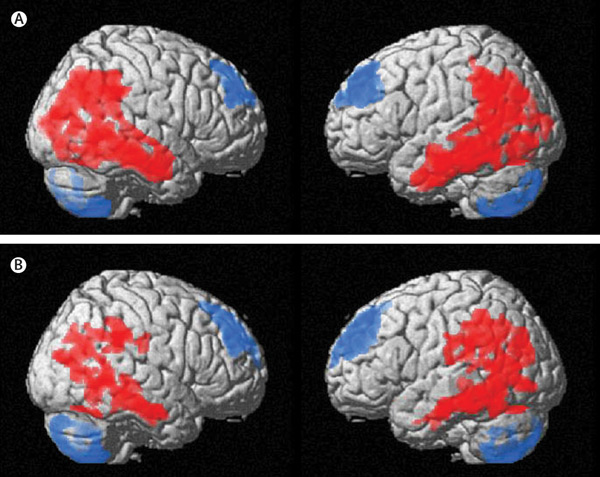
When the research team compared the scan results for brain activity before treatment and after a year of stimulation, they found changes in the regions linked to anorexia, suggesting that deep brain stimulation was able to directly affect the related brain circuits.
This included less activity in the putamen, thalamus, cerebellum among other areas, and more activity in the peripheral cortical areas, which are also linked to social perception and behaviour.
Prof Lozano said: “While our results show some early promise, more research will be needed before this becomes available for patients with anorexia. Our findings emphasise the need for continued research into novel neuromodulation strategies for anorexia nervosa, and for psychiatric disorders more broadly.”
Lead author Dr Nip Lipsan, of Sunnybrook Health Sciences Centre, Toronto, Canada, added: “Our study suggests that a focal brain intervention, deep brain stimulation, may have an impact on the circuitry of symptoms that serve to maintain anorexia and make it so difficult to treat.”
Lipsman N et al. Deep brain stimulation of the subcallosal cingulate for treatment-refractory anorexia nervosa: 1 year follow-up of an open-label trial. The Lancet Psychiatry 24 February 2017; doi: 10.1016/S2215-0366(17)30076-7 [abstract]
Image: courtesy The Lancet
Leave a Reply