
Researchers have announced the successful development of "nanorobots" able to deliver drugs to cancerous cells.
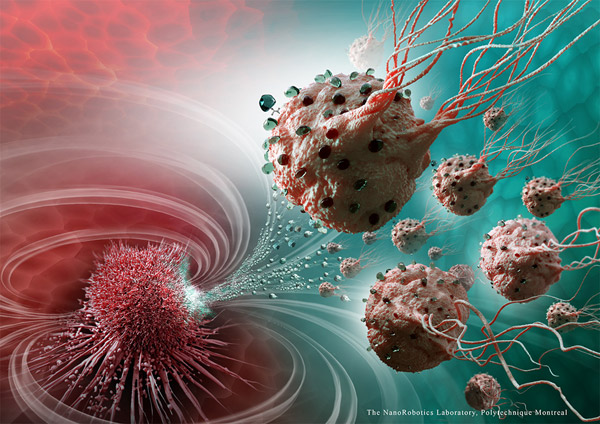 The "robots" are in fact adapted bacteria, controlled by a magnetic field, the Canadian developers reported.
The treatment, tested on laboratory mice, involves injecting the patient with 100 million of the "nanorobots."
The researchers in Montreal, Canada, say they have used a flagellated species of magneto-aerotactic bacteria. The organisms are self-propelled and guided by a magnetic field. They also detected oxygen-depleted regions of a tumour, the area where there is likely to be rapid proliferation.
Researcher Professor Sylvain Martel, director of the Polytechnique Montréal Nanorobotics Laboratory, said: “The drug’s propelling force was enough to travel efficiently and enter deep inside the tumours.
“This innovative use of nanotransporters will have an impact not only on creating more advanced engineering concepts and original intervention methods, but it also throws the door wide open to the synthesis of new vehicles for therapeutic, imaging and diagnostic agents.
“Chemotherapy, which is so toxic for the entire human body, could make use of these natural nanorobots to move drugs directly to the targeted area, eliminating the harmful side effects while also boosting its therapeutic effectiveness.”
Magneto-aerotactic bacteria deliver drug-containing nanoliposomes to tumour hypoxic regions Nature Nanotechnology 15 August 2016
Leave a Reply