For optimal maternal and neonatal outcomes, the rate of caesarean section would be around 19%, according to a new analysis.
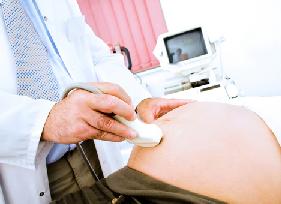 The US study claims that target rates for caesarean section are too low.
Currently C-section birth rates vary from 2% to over 50%, from country to country. Although the World Health Organisation recommends countries do not exceed 10% to 15%, this rate may be too low, the new findings indicate.
Dr Alex Haynes of the Stanford University School of Medicine, and colleagues at Brigham and Women’s Hospital, and the Harvard School of Public Health, looked at C-section rates and maternal and neonatal mortality in all 194 WHO member countries for the year 2012.
Their analysis shows that, as the country-level C-section rate increases up to 19%, maternal and neonatal mortality rates fall. Beyond 19% there tends to be no further improvement, they state in yesterday’s (1 December) Journal of the American Medical Association.
Dr Haynes states: "On a nationwide level, our findings suggest there are many countries where not enough C-sections are being performed, meaning there is inadequate access to safe and timely emergency obstetrical care, and conversely, there are many countries where more C-sections are likely being performed than yield health benefits.
"This suggests on a policy level that benchmarks for C-section rates on country-wide level should be re-examined and could be higher than previously thought."
Co-author Dr Thomas Weiser, adds: "All the things you need to do to build up surgical capacity, like personnel training, improving supply chains, providing clean water and sterile environments, all contribute to general strengthening of health care systems."
"It’s important to recognize that our findings do not pertain to individual patients or individual facilities," added co-author Dr George Molina. "Rather, our study can provide countries and policymakers some guidance about resource allocation and particular goals if they are trying to improve health care systems."
* A second study in the same journal from Aberdeen University links birth by planned caesarean section to increased asthma risk. But it found no link between the procedure and child becoming obese.
Louise Silverton, of the UK Royal College of Midwives, said: “One of the key issues in the UK is the wide variation in caesarean section rates vary widely across the country for similar groups of women. More effort is needed to find out why this is happening and to take steps to narrow the gap between those with high and low rates.
"Hospitals with high caesarean rates need to be looking at and learning from those that have low rates."
Molina, G. et al. Relationship Between Cesarean Delivery Rate and Maternal and Neonatal Mortality. JAMA 1 December 2015 doi:10.1001/jama.2015.15553
Leave a Reply