
British experts have called for a rethink on medical trials to prevent new outbreaks such as the Ebola epidemic in west Africa.
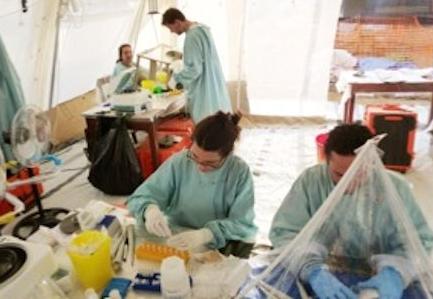 Conventional trials are too time-consuming and demand too many patients to test treatments to respond to urgent situations, according to Professor Sanjeev Krishna, of St George’s, University of London.
The Ebola outbreak led to the World Health Organisation agreeing high-speed procedures to try to get vaccines and a range of proposed treatments ready for use in Africa.
Professor Krishna has set out his concerns in The Lancet Infectious Diseases.
Professor Krishna and other experts point out that randomised control trials of new treatments may not be possible once the epidemic is over.
They warn: “Even if somehow the present epidemic is eventually contained (over a time course that is currently uncertain), the world will still be largely unprepared for the next epidemic that could strike again at any time in an equally explosive manner.”
Are adaptive randomised trials or non-randomised studies the best way to address the Ebola outbreak in west Africa? Lancet Infectious Diseases 14 April 2015 [abstract]
Leave a Reply