
Women who are less than ten weeks’ pregnant should not undergo ultrasound unless there is clinical reason, a report out today has claimed.
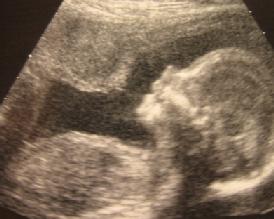 A Scientific Impact Paper (SIP) published by the Royal College of Obstetricians and Gynaecologists (RCOG) reveals that ultrasound is being increasingly used for non-medical reasons.
But, the authors say that the procedure should only be performed in the first 10 weeks of pregnancy – the embryonic period – when clinically indicated, while colour and pulsed wave Doppler, which involve greater average intensity and power outputs than the most commonly used B-mode ultrasound, should be avoided in the same period.
Dr Christoph Lees, reader in obstetrics and foetal medicine at Imperial College London and lead author of the paper, said: “Ultrasound scanning in the embryonic period is an invaluable resource in several important scenarios where the embryo is at possible risk.
“While there are presently no grounds for questioning the safety of diagnostic ultrasound in this context, ultrasound imaging is increasingly being used without obvious medical justification and the possibility of subtle long-term adverse effects should be kept in mind, particularly in the first weeks of gestation when the embryo is potentially the most vulnerable.”
Ultrasound is the most widely used medical imaging method during pregnancy and it is key to managing the problems of early pregnancy.
The paper, which examines both medical and non-medical use of ultrasound, concludes that there is no evidence that repeated exposure to ultrasound has cumulative and/or detrimental effects.
However, the authors caution that first ten weeks of gestation is a time of potential vulnerability as the embryo is very small and cell division is most rapid during this period.
The paper also notes an increase in the use of 3D and 4D ultrasound scans earlier in pregnancy. 4D ultrasound is ‘real time’ 3D and is associated with higher power outputs than 2D because the scanning time is longer. However, 3D ultrasound allows the rapid acquisition of a ‘volume’ for later off line analysis and may in fact be associated with lower exposure time.
The authors said they did not recommend the use of ultrasound including 4D for the sole purpose of souvenir images or video recordings in the embryonic period.
Dr Sadaf Ghaem-Maghami, chair of the RCOG’s Scientific Advisory Committee, added: “B-mode ultrasound used for clinical reasons from conception to ten weeks of gestation is safe and the benefits outweigh any theoretical risks. We are adopting a precautionary approach and are highlighting the small but possible risks to women so that they can make informed choices.
“We also emphasise that any healthcare professional involved in the use of ultrasound is aware of the safety principles of ultrasound. These have now been included within the RCOG ultrasound curriculum.”
Leave a Reply