
Basic medical care for Ebola is being "neglected", despite the fact that it could reduce the number of deaths, it is claimed today.
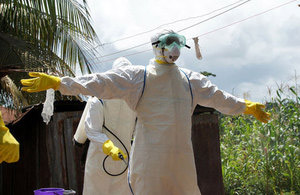 Dr Ian Roberts from the London School of Hygiene & Tropical Medicine, England, and Dr Anders Perner, intensive care specialist at the University of Copenhagen, Denmark, said the misconception that there are no proven treatments for Ebola virus disease has meant that simple treatments such as intravenous fluids and electrolytes are not given priority.
Writing a Comment in The Lancet, they write: “It is often stated that there are no proven therapies for Ebola virus disease but that potential treatments, including blood products, immune therapies, and antiviral drugs, are being evaluated. This view is inaccurate.”
They say that nausea, vomiting, and diarrhoea cause serious water and electrolyte depletion, which leads to circulatory collapse and death, which means introducing practical protocols for managing fluids and electrolytes has not been given sufficient priority.
Offering basic treatment could substantially reduce the death rate.
They also call for rigorous clinical trials in situations where there is uncertainty about the best way to treat patients.
“Before assuming that west Africans will reject the benefits of high quality clinical research we should first seek their opinions,” they say.
“A stronger policy focus on providing effective care for patients with Ebola virus disease is not only a humanitarian imperative, but could also help to bring the epidemic under control.”
They go on to say that although patients being cared for in Ebola treatment centres are less likely to infect other people than those cared for in the community, the centres had to be more than a quarantine setting.
“Patients will be reluctant to attend treatment centres unless the care they receive from them is superior to the care provided by family members,” they say.
“Treatment centres must be a setting where the best information is applied in the interest of improving patient outcomes, and where valid information is generated in the interests of future patients.”
* According to World Health Organisation figures yesterday the outbreak in Sierra Leone has nearly overtaken Liberia. Some 7,420 cases have been reported in Sierra Leone compared with 7,650 in Liberia, which has seen 3,155 deaths compared with 1,609 in Sierra Leone.
Roberts I, Perner A. Ebola virus disease: clinical care and patient-centred research. Lancet. 6 December 2014. [abstract]
Leave a Reply