
A doctor has claimed a "miraculous" recovery after surviving the Ebola virus and taking an experiment serum.
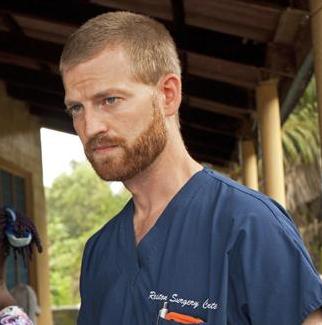 Kent Brantly told of his joy at being alive after being discharged from Emory University Hospital in Atlanta, USA.
He had returned there from Liberia after succumbing to the virus with another missionary from the Samaritan’s Purse organisation.
The drug ZMapp is known to have been given to six infected people and supplies are now exhausted, it was reported.
Along with the two US missionaries it went to three Liberian health workers – who may be recovering – and a Spanish priest who died.
Dr Brantly, aged 33, said: "Today is a miraculous day. I am thrilled to be alive, to be well, and to be reunited with my family. As a medical missionary, I never imagined myself in this position."
The World Health Organisation said the drug had been given to a nurse and two doctors in Liberia. The nurse and one doctor had shown a "marked improvement" while the second doctor had improved a little.
WHO said it could be calling its next summit on potential treatments for Ebola early next month.
But two experts yesterday spoke of "critical ethical principles" that should apply to the use of Ebola drugs.
Writing in The Lancet, bioethicists Professor Ezekiel Emanuel, of the University of Pennsylvania, Philadelphia, USA, and Dr Annette Rid, of King’s College London, UK, say the use of the drugs should not be confined to "well off or well-connected" patients.
They call for randomised control trials and suggest drugs should also be deployed in areas where they might help stem the spread of the virus.
Dr Rid said today: "It is more likely than not that the interventions will not improve symptoms for patients, and might even weaken them as they battle a life-threatening disease.
"Experimental Ebola treatments or vaccines should only be deployed in clinical trials, and if trials are done, they must meet ethical principles for research."
* Meanwhile the authorities in Ireland are conducting tests to establish whether a native Irish man contracted the virus.
The man is thought to have travelled to Sierra Leone to work.
Lancet 22 August 2014
Leave a Reply