
There is little evidence to suggest there is a “tsunami” of traumatised veterans who are dangerous, drug-addicted, on the dole and on the streets, according to one of the UK’s leading psychiatrists.
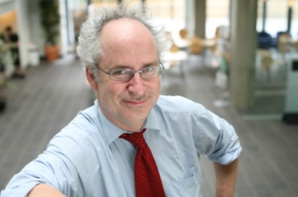 Professor Sir Simon Wessely, president of the Royal College of Psychiatry (RCP), and director of the King’s Centre for Military Health Research Institute of Psychiatry at King’s College, London, told delegates at the RCP’s International Congress in London that public perception of the problem and the actual scale of the issue were very different.
A 10-year study of British veterans that he and his colleagues undertook at King’s College, which compared 7,700 soldiers who had been deployed in Iraq and Afghanistan, and 10,000 who had not, showed that 97% had not developed post-traumatic stress disorder (PTSD).
However, surveys show that the overwhelming majority of the public believe that most service personnel return from Iraq or Afghanistan with physical and mental health problems.
PTSD was more likely in those who had been in combat, as opposed to simply deployed, and those in the reserves. Only alcohol misuse was increased in all who had deployed.
“We must beware of reinforcing the already widespread view that most returning soldiers are dangerous, drug addicted, depressed and have physical and emotional problems,” said Prof Wessely.
While 22.5% of combat troops misused alcohol, 6.9% were diagnosed with “probable” PTSD. The figures were 14.2% and 3.6% respectively for those soldiers in supporting roles.
When the study was repeated in 2009, researchers found little change in the rates of PTSD – even when they had been deployed in war zones 2 or 3 times. They also found that rates of PTSD were lower on subsequent deployments but this is because those who have developed mental health problems tended not to be redeployed.
“Over the 10 years of the study there still has been little that justifies the label of a ‘time-bomb’ or ‘tidal wave’ of veterans with mental health problems,” said Prof Wessely.
“Of course, the absolute numbers requiring and sometimes seeking treatment continue to increase with every year that we remain at war, but this is not a ‘tsunami’ or ‘tidal wave’.”
Although incidences of PTSD were lower than the public thought, the opposite is true for the risks of violence.
A study on 13,856 veterans, conducted by Dr Deirdre MacManus, a consultant forensic psychiatrist at King’s College, London, and consultant psychiatrist for the London Veterans Service, found that 13% of soldiers said that they had been involved in violent behaviour in the weeks after returning home.
Of those, one third reported violence against a family member.
When lifetime criminal records were examined, those who had served in the armed forces had lower rates of all convictions but had increased rates of violent convictions.
However, Prof Wessely said the main issue that mental health professionals should focus on was alcohol misuse, which could lead to risky behaviour, such as promiscuity and dangerous driving.
“Alcohol remains part of the culture in the UK military,” he explained. “Units who drink together have a higher morale and cohesion. So simply evangelising against the evils of drink is a little simplistic – and few can doubt that alcohol is part of bonding processes. Sadly, however, it also comes at a cost.”
Leave a Reply