
Scientists hope that the salamander can provide answers as to how humans could eventually regrow body parts after discovering for the first time the importance of the ERK pathway.
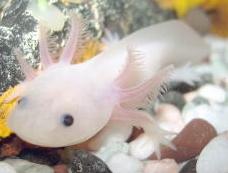 Writing in Stem Cells Report, Dr Max Yun, of University College London’s Institute of Structural and Molecular Biology, and his team identified a key difference between the activity of ERK pathway in salamanders and mammals that will help scientists to understand why humans are unable to regrow limbs and to find how regeneration of human cells can be improved.
They found that in order for salamander cells to be reprogrammed and contribute to the regeneration of different body parts, the pathway has to be active at all times.
It is not fully active in mammalian cells, but when the pathway is forced to be so the cells have more potential for reprogramming and regeneration.
“While humans have limited regenerative abilities, other organisms, such as the salamander, are able to regenerate an impressive repertoire of complex structures including parts of their hearts, eyes, spinal cord, tails, and they are the only adult vertebrates able to regenerate full limbs,” said Dr Yun.
“We’re thrilled to have found a critical molecular pathway, the ERK pathway, that determines whether an adult cell is able to be reprogrammed and help the regeneration processes. Manipulating this mechanism could contribute to therapies directed at enhancing regenerative potential of human cells.”
Yun, M. H. et al. Sustained ERK Activation Underlies Reprogramming in Regeneration-Competent Salamander Cells and Distinguishes them from Their Mammalian Counterparts. Stem Cell Reports. June 2014.
Leave a Reply