
A tiny fly might be able to help diagnose cancer, using its sense of smell, researchers have revealed.
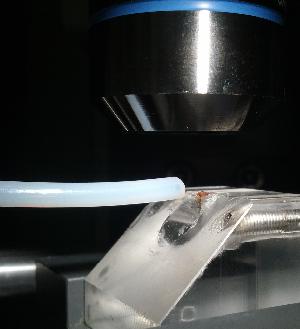 The fruit fly recognises smells through its antenna – and now scientists say they have successfully harnessed this by genetically modifying the animal to have fluorescent brain cells.
So far researchers say they have been able to distinguish five different kinds of breast cancer from healthy cells by studying the patterns of glowing neurons under the microscope.
Other studies have shown that dogs can distinguish different kinds of cancer.
But the joint Italian-German research team says the fruit flies can give very specific results.
The research at the University La Sapienza, Rome, Italy, and the University of Konstanz, Germany, has been published in the journal Scientific Report.
Researcher Professor Giovanni Galizia, of the University of Konstanz, Germany, said: "What really is new and spectacular about this result is the combination of objective, specific and quantifiable laboratory results and the extremely high sensitivity of a living being that cannot be matched by electronic noses or gas chromatography."
He added: "The high sensitivity of the natural olfactory receptors, paired with the quickness with which we can generate these test results, might lead to the development of a cheap, fast and highly-efficient pre-screening that can detect cancer cells well before we can discover them with the present diagnostic imaging techniques."
More than apples and oranges – Detecting cancer with a fruit fly’s antenna. Scientific Report 6 January 2014 [abstract]
Leave a Reply