
The hardest kind of TB to treat may be spreading in Africa because of treatment failures in South African hospitals, it was claimed today.
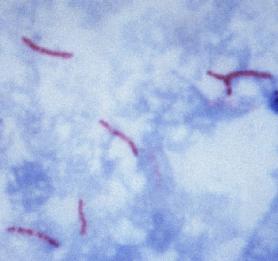 Researchers found that large numbers of patients treated for the most drug-resistant form of the disease failed to be cured.
Instead they were sent home where they lived for months or years.
Researcher Professor Keertan Dheda, of the University of Cape Town, South Africa, said today: "Alarmingly, we have shown for the first time that, in contrast to sporadic and isolated cases of treatment failure and near total or totally drug-resistant cases that have been reported in several countries, treatment failure, and discharge of such patients into the wider community, is occurring systematically on a country-wide level in South Africa."
The findings of the project studying the fate of patients treated for XDR-TB, which is resistant to most drugs, are reported in The Lancet.
The researchers studied the fate of some 107 patients over a four year period.
After five years, some 12 patients had recovered and 79 had died.
In one case a patient had an infection resistant to ten drugs while two-thirds had infections resistant to eight drugs.
The researchers found that 45 patients were discharged from hospital although 19 of these had not been treated successfully.
Professor Dheda called for urgent action in South Africa to create modern sanatoriums, comprehensive home care and tough community infection control plans.
He said: "Major progress has been made by the government in combating HIV, making available anti-retroviral therapy, and combating poverty and over-crowding. However, more needs to be done to tackle and to prevent the growing problem of drug-resistant TB."
Lancet 17 January 2014 [abstract]
Leave a Reply