
New links have been found between fibre in the diet and asthma.
 Researchers at Lausanne University Hospital in Switzerland looked into dietary fibre, as it has an important effect on gut bacteria and the immune system.
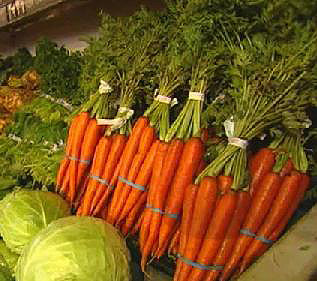
Dr Benjamin Marsland and his team carried out tests on mice and found that a lack of "fermentable fibres" – found in fruit and vegetables – can trigger allergic reactions that inflame the lungs. A drop in intake of fruit and vegetables could have contributed to increasing rates of allergic asthma over the past fifty years, they say.
Dr Marsland says: "We are now showing for the first time that the influence of gut bacteria extends up to the lungs."
His team gave mice a standard diet of 4% fermentable fibres, or a low-fibre food with 0.3% fermentable fibres, which is more similar to the Western diet. When exposed to house dust mites, the mice on the low-fibre food had a stronger allergic reaction than the other mice. This included much more mucus production in the lungs.
A complex series of reactions lie behind this effect. When fibre reaches the intestine they are fermented by bacteria and turned into short-chain fatty acids, which enter the bloodstream and influence the growth of immune cells in bone marrow.
If house dust mites are detected, these helpful immune cells move into the lungs and trigger a weaker allergic response. So eating more fruit and vegetables could potentially aid asthmatics.
Dr Marsland adds in the 5 January copy of Nature Medicine: "We plan to conduct clinical studies to find out how a diet enriched with fermentable fibres affects allergies and inflammations."
Trompette, A. et al. Gut microbiota metabolism of dietary fiber influences allergic airway disease and hematopoiesis through GPR41. Nature Medicine 5 January 2014 doi: 10.1038/nm.3444
Leave a Reply