
A radical new technique, based on reprogramming immune system cells, is proving a "powerful" treatment, researchers revealed yesterday.
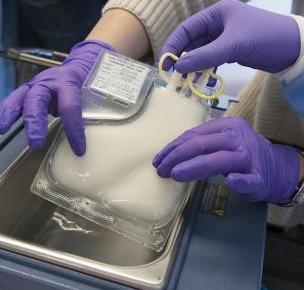 Promising results from the first patients treated with the genetically engineered T-cells were revealed at the conference of the American Society of Hematology in New Orleans, USA.
Some 59 patients with chronic and acute lymphocytic leukaemia have received the treatment, starting in 2010, in some cases after conventional bone marrow transplant treatments failed.
Known as CTL019, it involves removing patient T cells and reprogramming them in laboratory conditions with a gene transfer technique based on a lentivirus.
The process is known as chimeric antigen cell receptor engineering and is part of an emerging field dubbed "precision medicine."
Out of three patients with chronic disease treated in 2010, two remain in remission after receiving the treatment, known as CTL019, researchers said.
The researchers say that out of 32 adult patients in total with chronic disease, seven have now experienced complete remission and another eight responded to therapy.
Out of 22 child patients with acute disease, 19 experienced complete remission and five have relapsed, including Emily Whitehead, aged eight. Meanwhile five adults with acute disease have all enjoyed complete remission, the researchers say.
Researcher Professor Carl June, of the University of Pennsylvania, said: "In a very short time, we’ve learned so much about how CTL019 works and how powerful it can be.
"Our findings show that the human immune system and these modified hunter cells are working together to attack tumours in an entirely new way."
Doctors at the Children’s Hospital of Philadelphia, Pennsylvania, said Emily remained free of cancer after treatment last year and is now back at school.
Researcher Dr Stephan Grupp said: "Our results serve as another important milestone in demonstrating the potential of this cell therapy for patients who have no other therapeutic options.
"We are also very excited that this approach has worked and been safe in patients who have relapsed after a bone marrow transplant."
Leave a Reply