
Hidden vegetables are to play a key role in a drive to improve poor quality diets across Europe, researchers revealed yesterday.
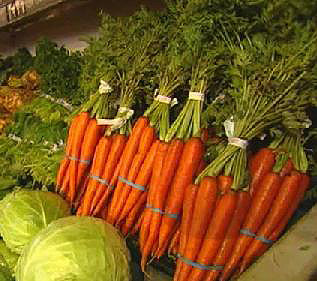 A four country project is to search for ways of improving the diets of children and elderly people.
It was announced as a study showed that European diets are low in many important nutrients.
The project, backed by cancer charity Marie Curie, will work in Denmark, France, Italy and the UK.
Researchers want to demonstrate it can be "easy" to eat a nutritious diet, rich in vegetables.
Dr Heather Hartwell, of Bournemouth University, UK, said: “This research will not only bring new information about the mapping of hospitality practice within the wider public health agenda but it will also play a major contribution towards evidence based practice for the EU Consumer Policy Strategy and to the Action Plan on Food and Nutrition Policy."
A major study of European diets in eight countries found low levels of some key vitamins and minerals, researchers said.
Vitamin D is a major problem, linked to shortage of sunlight, researchers said.
But there were also low levels of iron, calcium, zinc, folic acid and vitamins B1, B2 – riboflavin – and B6.
The research involved the UK, Spain, Poland, France, Germany, the Netherlands, Belgium and Denmark.
The researchers say Spain has "particular" problems as it tends to move away from a traditional Mediterranean diet to the use of more processed foods.
Writing in the British Journal of Nutrition, the researchers say the have provided "valuable information on micronutrient intake in Europe and the likelihood of its inadequacy country by country."
Mensink G.B.M. et al. Mapping low intake of micronutrients across Europe. British Journal of Nutrition 2013; 14:1-19.
Leave a Reply