
New findings show the level of awareness foetuses and newborn babies have about movement and touch, researchers reported yesterday.
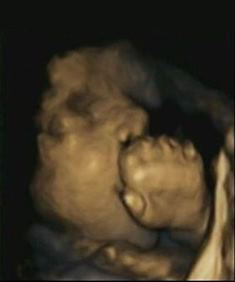 Researchers carried out 60 "4D" scans of 15 healthy foetuses between 24 weeks and 36 weeks of gestation. This type of scan follows the foetus’ movements in three-dimensions, with time being the fourth dimension.
Analysis of the scans showed that foetuses in the earlier stages of gestation tended to touch the upper part and sides of their heads more frequently. Then, as they matured, they began to touch the lower, more sensitive, part of their faces including their mouths more often.
Once they were at 36 weeks, many of the foetuses opening their mouths before touching them, suggesting that they could anticipate that their hands were about to touch their mouths, according to the researchers.
Dr Nadja Reissland of Durham University, UK, and colleagues say that this increased sensitivity around a foetus’ mouth at this later stage of pregnancy could mean that they have more ‘awareness’ of mouth movement.
The results, published yesterday (8 October) in the journal Developmental Psychobiology, could potentially boost our understanding about babies’ readiness to interact socially and their ability to calm themselves by sucking on their thumb or fingers.
These findings may also help indicate how ready premature babies are for breast or bottle feeding, rather than through a drip into a vein.
Dr Reissland says: "What we have observed are sequential events, which show maturation in the development of foetuses, which is the basis for life after birth. The findings could provide more information about when babies are ready to engage with their environment, especially if born prematurely."
Reissland, N. et al. The development of anticipation in the fetus: a longitudinal account of human fetal mouth movements in reaction to and anticipation of touch. Developmental Psychobiology 8 October 2013 doi: 10.1002/dev.21172
Leave a Reply