
High-flying pilots may face a threat to their brains, researchers warn today.
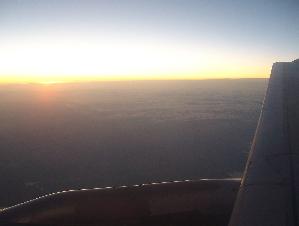 A new study has found early signs of brain damage in air force pilots who spend time at high altitudes.
So far researchers have found tiny signs of brain damage in these pilots.
The findings could raise concerns for others who work in environments with low air pressure, such as mountain climbers.
Above 18,000 feet, pilots are at risk of decompression sickness like deep sea divers. In contrast Mount Everest is 29,000 feet high.
Dr Stephen McGuire, of the US Air Force School of Aerospace Medicine, said the rate of decompression sickness amongst pilots had trebled since 2006.
His research, reported in the journal Neurology, compared 102 pilots flying U-2 planes with 91 non-pilots.
Scans showed that pilots had three times as many brain lesions as non-pilots and four times the volume of lesions. They were also found throughout the brain – while in non-pilots they were found in the frontal white matter, a normal pattern of ageing.
Dr McGuire, who is also based at the University of Texas, San Antonio, USA, said: "These results may be valuable in assessing risk for occupations that include high-altitude mountain climbing, deep sea diving and high-altitude flying."
Neurology 20 August 2013
Leave a Reply