
A rapid response has been identified that could help to stop infectious diseases such as bird flu, swine flu and SARS before they take hold, it is revealed today.
 Writing in the latest edition of PLOSONE, researchers from the University of East Anglia, UK, say that the findings and recommendations will help stop the spread of other infectious diseases.
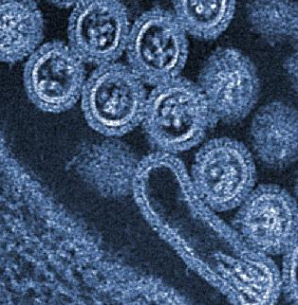
They focused on avian flu virus strain H5N1, which has been responsible for the deaths of millions of poultry and 375 confirmed human deaths, and identified key stages in the poultry trade chain that lead to its spread to other birds, animals and humans.
Investigating Vietnam’s poultry trade, the research team adopted a system called Hazard Analysis of Critical Control Points (HACCP), which is widely used in the food production industry, to see if it could be used as a rapid response to emerging outbreaks.
They found four stages within the poultry trade chain that are high risk for the transmission of HPAI viruses in human and poultry populations.
The first is contact within poultry flocks, which act as viral ‘mixing pots’. These include markets, bird vaccination centres, and at cock fighting contests. The second is the transportation and sale of poultry and eggs, while the third high risk stage is the purchase and slaughter of poultry from markets.
Finally, the preparation of poultry for consumption – particularly in unhygienic conditions and when meat is raw or undercooked – is another stage that is considered high risk.
Dr Diana Bell and Dr Kelly Edmunds, from the school of biological sciences, said preventative measures should include isolating and quarantining flocks; using protective equipment such as masks, gloves and sterile utensils when slaughtering and preparing carcases for consumption; and using social media to promote good hygiene standards.
Dr Bell said: “Since 1980 an average of one new infectious disease emerges in humans every eight months – representing a substantial global threat to human health.
“Diseases which originate in birds and mammals such as SARS and bird flu represent 60 per cent of outbreaks. As well as representing a significant global health threat, they also create a burden to public health systems and the global economy.
“We identified poultry transportation, slaughter, preparation and consumption as critical control points in response to HPAI H5N1 outbreaks in Vietnam.”
Dr Edmunds added: “We also showed that adopting the Hazard Analysis of Critical Control Points (HACCP) system, which is already used in the food production industry, could work very effectively as a precursor to more time-consuming quantitative data collection and biomedical testing.”
The research was conducted as part of a three-year interdisciplinary study of the impact of H5N1 on mechanisms of transmission, local livelihoods and food security.
Edmunds K et al. Hazard Analysis of Critical Control Points Assessment as a Tool to Respond to Emerging Infectious Disease Outbreaks. PLOS ONE. 14 August, 2013.
Leave a Reply