
Pregnant women who exercise moderately three times a week in their second and third trimesters halve the risk of giving birth to a heavy baby.
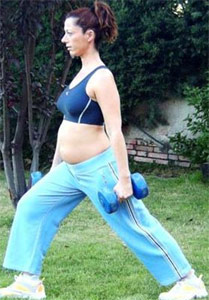 Research in Spain, led by the Polytechnic University of Madrid, European University of Madrid and the University of Granada, said by reducing the risk of having a newborn with macrosomia (weighing more than 4 kilogrammes or 8lbs 13oz), women also cut their chances of having to deliver by caesarean section.
Rubén Barakat of the Polytechnic University of Madrid and colleagues ran a series of programmed training sessions for 510 pregnant women who attended two primary health care centres in Leganés, Madrid.
All said they were sedentary, which is exercising for less than 20 minutes on fewer than 3 days a week, so they agreed to follow a training schedule that comprised 55-minute sessions of aerobic, muscle strength and flexibility exercises three days a week from weeks 10-12 to weeks 38-39 of pregnancy. A control group received standard recommendations and care.
The results, published in The British Journal of Sports Medicine showed the training sessions did not reduce incidences of gestational diabetes mellitus but reduced the incidence of macrosomia by 58% and caesarean delivery, which fell by 34%.
These findings “reinforce the need to encourage more supervised exercise interventions during pregnancy to combat the negative effects of gestational diabetes mellitus”, says Jonatan Ruiz, researcher in the University of Granada department of physical and sports education.
Barakat R et al. Exercise during pregnancy and gestational diabetes-related adverse effects: a randomised controlled trial. Br J Sports Med 2013 47: 630-636. doi: 10.1136/bjsports-2012-091788
Leave a Reply