
Some people are naturally hungrier than others – facing an increased risk of obesity from their hunger genes, researchers reported last night.
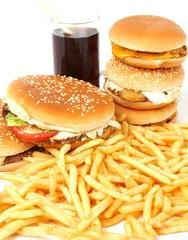 As many as 16% of people carry a "hunger gene", which means they become hungry soon after eating a meal.
The variant of the FTO gene leads to high levels of the hormone ghrelin, which triggers hunger pangs.
British researchers have also shown how images of food trigger responses in the brain and lead to the release of the hormone in people with the gene variant.
The discoveries have been made by researchers at University College London, the Medical Research Council and the Institute of Psychiatry at King’s College, London, UK.
They were researching the AA variant of the gene, which has already been linked to obesity.
Some 359 volunteers, all male, took part in the research, reported in the Journal of Clinical Investigation.
Researcher Dr Rachel Batterham from University College London Hospitals, said exercise such as running and cycling together with a high protein diet could help affected people reduce hunger pangs.
She said: “We’ve known for a while that variations in the FTO gene are strongly linked with obesity, but until now we didn’t know why.
"What this study shows us is that individuals with two copies of the obesity-risk FTO variant are biologically programmed to eat more. Not only do these people have higher ghrelin levels and therefore feel hungrier, their brains respond differently to ghrelin and to pictures of food – it’s a double hit."
She added: "There are also some drugs in the pipeline that suppress ghrelin, which might be particularly effective if they are targeted to patients with the obesity-risk variant of the FTO gene.”
Professor David Lomas, of the Medical Research Council, said: "Here scientists have used an innovative combination of human studies and more basic biology to finally give us the ‘smoking gun’ linking FTO variations, hunger and weight gain.
"The brain imaging adds a fascinating insight into the role of the nervous system in obesity, which is becoming increasingly clear."
Karra et al. A link between FTO, ghrelin and impaired brain food cue responsivity. Journal of Clinical Investigation 16 July 2013
Leave a Reply