
Hopes for a new drug for Alzheimer’s disease were dashed by researchers last night.
 Researchers in Belgium and the USA revealed findings of separate pieces of research, which failed to find benefits from the drug bexarotene.
The drug is a retinoid developed to treat cutaneous T-cell lymphoma.
A year ago researchers said it had shown promise against Alzheimer’s disease in tests on laboratory mice.
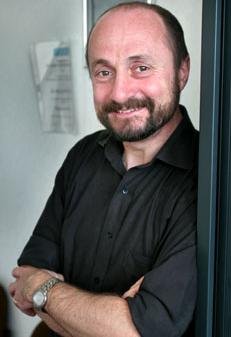
But writing in Science last night Bart De Strooper, of Katholieke Universiteit Leuven, Belgium, says the drug should not be tested on patients with Alzheimer’s disease.
He said: "Science is a learning process and one learns by trial and error and by starting again and correcting mistakes. Therefore, it is logical that conclusions from scientific research – even in prestigious journals – need to be re-evaluated from time to time.
"If results cannot be reproduced, it is very important that this is mentioned so that other scientists can also determine the value of a publication (reproducible science is the only true science). This is the only way that we can learn from our mistakes and hopefully one day develop a drug.”
And Professor David Borchelt, of Florida University, USA, said: "We thought it was important that something like this, which got a lot of publicity and patients were immediately looking to try to get access to this drug, that it was important to publish the fact that we couldn’t reproduce the most exciting part of the study.
"Maybe there should be some caution going forward in regard to patients.”
"Technical comment on ApoE-Directed Therapeutics Rapidly Clear b-Amyloid and Reverse Deficits in AD Mouse Models”, Ina Tesseur et al., Science 24 May 2013
Leave a Reply