
Ancient humans may have suffered from widespread heart disease – casting doubt on the idea it is a disease of the modern age, according to a global study.
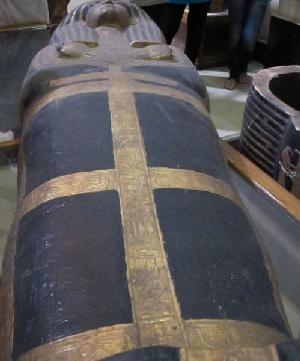 Researchers have found traces of hardening of the arteries in mummified corpses from four regions of the world, it was announced today.
Some 137 mummies have been studied from Egypt, Peru, Alaska and south-west America.
Researchers say the mummies came from different cultures with different lifestyles and diets and outside Egypt, mummification occurred because of the local climate.
Reporting in The Lancet, they say that 34% of the mummies showed signs of atherosclerosis – hardening of the arteries. The disease tended to affect people who had been older when they died.
Researcher Professor Randall Thompson, of Saint Luke’s Mid America Heart Institute in Kansas City, USA, said: "We found that heart disease is a serial killer that has been stalking mankind for thousands of years.
"A common assumption is that the rise in levels of atherosclerosis is predominantly lifestyle-related, and that if modern humans could emulate pre-industrial or even pre-agricultural lifestyles, that atherosclerosis, or at least its clinical manifestations, would be avoided.
"Our findings seem to cast doubt on that assumption, and at the very least, we think they suggest that our understanding of the causes of atherosclerosis is incomplete, and that it might be somehow inherent to the process of human ageing."
The British Heart Foundation said the findings should not be seen as a reason not to adopt a healthy lifestyle to prevent heart disease.
Maureen Talbot, of the Foundation, said: "We simply don’t know enough about the diet and lifestyle of the people studied to say whether behaviour or genetics lies at the root of the heart problems observed.
"We can’t change the past, but lifestyle choices can help to affect our future. By eating well, quitting smoking and keeping active, you can help to protect your heart.”
Lancet 11 March 2013 [abstract]
Leave a Reply