
Researchers say they have developed the world’s most sensitive sensor device for analysing blood – and it could soon be in doctors’ surgeries.
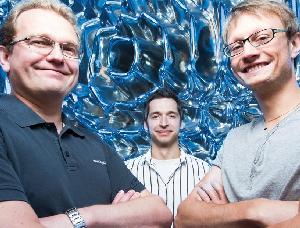 The device has been developed in Norway and it is claimed it will be able to identify individual particles, such as low concentrations of proteins and DNA or RNA molecules.
It uses photonic crystals arranged in a pattern found in the wings of some butterflies.
The project has involved the University of Oslo, Stanford University in California, USA, the Norwegian University of Science and Technology, the University of Bergen, the University of Zurich, Switzerland, and the Fraunhofer Institute, Germany.
The researchers say the device can detect particles as small as 20 nanometres.
Tests on blood samples and specific proteins are yet to be undertaken.
Researcher Ib-Rune Johansen, of SINTEF ICT, Oslo, said it was the "the ultimate bio-sensor – at the cutting edge of nanotechnology."
He added: "We are very optimistic. So far, we have succeeded without a lot of support. However, a great deal of research remains to be done."
Leave a Reply