
Injecting “good” cholesterol after suffering a heart attack could lower the risk of subsequent attacks, a conference has heard.
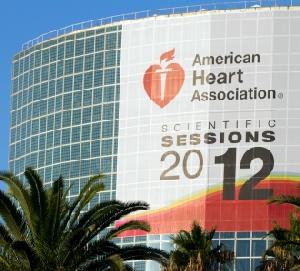 Delegates at the American Heart Association’s Scientific Sessions 2012, Los Angeles, California, USA, this week will hear that an intravenous infusion of the chief protein in high density lipoprotein (“good” cholesterol) appears to boost the body’s ability to move cholesterol out of plaque-clogged arteries.
After a heart attack or chest pain, patients are at high risk of another attack and although standard heart attack medications, such as aspirin and anti-platelet drugs, prevent clotting, they do not eliminate the underlying cause of cholesterol build-up in artery plaque.
Other HDL drugs, such as niacin and fibrates, which do attack the underlying cause, gradually raise HDL and may prevent heart attacks years after the start of therapy.
Dr Andreas Gille, lead author of the study and head of clinical and translational science strategy at CSL Limited in Parkville, Australia, studied CSL112, an infusible and natural human formulation of Apolipoprotein A-1 (ApoA-1), the key protein in HDL particles that transports cholesterol from arteries and other tissues into the liver for disposal.
Looking at the markers of cholesterol movement after a single treatment of CSL112, he found that cholesterol extraction from cells rose up to 270% from baseline immediately; and that PreBeta1-HDL, a subfraction of HDL involved in cholesterol elimination, increased up to 3,600 percent from baseline.
“Overall, CSL112 behaved as well or better than we expected and all the changes are consistent with the desired elevation in reverse cholesterol transport activity,” Dr Gille said.
“We did not observe any unfavourable changes in the low density lipoprotein or ‘bad’ cholesterol-related biomarkers tested.”
Meanwhile, delegates will also hear from Canadian researcher Dr Mitchell Jones, of McGill University in Montreal, whose study shows that two daily doses of a probiotic reduced key cholesterol-bearing molecules in the blood as well as “bad” and total cholesterol.
Previous studies have demonstrated that Lactobacillus reuteri NCIMB 30242 has lowered blood levels of LDL or “bad” cholesterol, but Dr Mitchell and colleagues looked to see if it could lower LDL and reduce blood levels of cholesterol esters, which are molecules of cholesterol attached to fatty acids that are linked to heart disease.
Studying 127 patients with high cholesterol, they gave half L. reuteri NCIMB 30242 twice a day, while the rest were given placebo capsules.
Those taking the probiotic had LDL levels that were 11.6% lower than those on placebo after nine weeks. Cholesterol esters were reduced by 6.3% and cholesterol ester saturated fatty acids by 8.8%, compared with the placebo group.
Probiotic takers had total cholesterol reduced by 9.1%, while HDL “good” cholesterol and blood triglycerides, a dangerous form of fat in the blood, remained unchanged.
Conference goers will also hear how genetically-engineered tomatoes produced a peptide that mimics the actions of good cholesterol when eaten, decreasing plaque build-up in mice.
Leave a Reply