
Fat around the abdomen is a key factor in increasing diabetes risk, experts warn today.
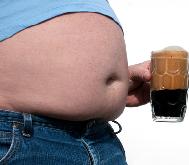 Experts have discovered that obese people carrying fat in different areas are at a varying risk of type 2 diabetes.
Those with too much "visceral" fat, that is, fat in the abdomen surroundings the vital organs, have a higher risk than those with too much "subcutaneous" fat, or abdominal fat under the skin.
Researchers led by Dr James de Lemos at UT Southwestern Medical Center, USA, publish their findings in today’s issue of the Journal of the American Medical Association.
The team used magnetic resonance imaging (MRI) and dual energy X-ray absorptiometry to see the location and function of body fat in 732 obese adults (body mass index of 30 or greater) aged 30 to 65, free of diabetes or cardiovascular disease at the start of the study.
Over the next seven years, 39 per cent developed diabetes or prediabetes, which is an intermediate state before diabetes develops. This group had greater amounts of visceral fat than the other participants.
Dr de Lemos said: "Understanding the biological differences between visceral fat and subcutaneous fat may help doctors to more effectively battle the obesity epidemic occurring in the United States."
He added that the risk for diabetes varies widely among obese people, so it may be possible to target lifestyle, medical, and surgical treatment to those at the highest risk.
In the same journal, Dr Sheldon Litwin of Georgia Health Sciences University, USA, warns that obesity can substantially hinder the diagnosis and treatment of heart disease. He writes: "The problem [of obesity] is of enormous magnitude. This really is the number one issue facing us."
Dr Litwin suggests that one solution may be gastric bypass surgery, which leads to faster weight loss – and reduced heart disease risk – than lifestyle modification.
Dysfunctional Adiposity and the Risk of Prediabetes and Type 2 Diabetes in Obese Adults. Neeland, I. J. et al. The Journal of the American Medical Association September 19, 2012 doi:10.1001/2012.jama.11132
Leave a Reply