
Fatty foods would need a "fat tax" of at least 20 per cent to make a significant difference to the way Britons eat, experts warn today.
Some countries have already introduced similar taxes and today the issue is debated in the British Medical Journal.
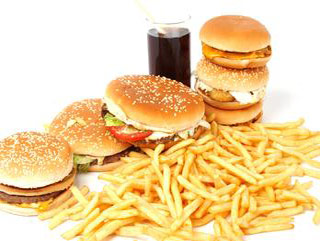 In the British Medical Journal, Dr Oliver Mytton of Oxford University, UK, and colleagues look at the potential health effects of bringing in a "fat tax". They believe that such a tax would need to be at least 20 per cent to significantly cut diet-related conditions such as obesity, cancer and heart disease.
They point out that in the past year Denmark has introduced a "fat tax", Hungary a "junk food tax", and France a tax on sweetened drinks. In addition, the prime minster, David Cameron, says the UK should consider them.
"Price is an important determinant of food choices and diet," the authors state. "Economic theory predicts that as the price of an item rises the consumption of that item will typically fall."
They add that the health gains are likely to be greater for the poor, as this group currently tends to consume less healthy food and has a higher rate of most diet related diseases. Subsidies on healthy foods such as fruit and vegetables should also be considered, they believe.
Also in the journal, Corinna Hawkes of the Centre for Food Policy at City University London, UK, explores the food supply system. She says the United Nations agree on the need for food policies.
"Scientific studies indicate that policies to promote consumption of fruits, vegetables, whole grains, nuts, and fish and reduce intake of animal fats, trans fats, and sodium could prevent millions of premature deaths," she reports.
She adds that policies might include altering the ingredients of food products, providing more information for consumers, setting school food standards, restricting food marketing to children, and fruit and vegetable promotion.
Leave a Reply