
British scientists have found a natural molecule – found in the body – that might help control allergic reactions caused by the house dust mite, it has been announced.
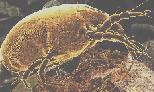 The discovery has been made at Nottingham University, where a team of researchers has been studying how the immune system reacts to <!allergens from >dust mites.
The dust mite is thought to be a major cause of allergy and asthma.
The new molecule, called DC-SIGN, is found on the immune cells which enable the body to recognise the dust mite allergens but seems to dampen down reactions, according to researchers Dr Amir Ghaem-Maghami and Professor Farouk Shakib.
The findings have been reported in the Journal of Biological Chemistry.
Dr Ghaem-Maghami said: “There has been a sharp increase in the prevalence of allergies over the past few decades and allergic asthma among children has reached epidemic proportions in many industrialised countries, including the UK.
"Despite improvements in patient care, mortality and morbidity of allergic asthma has remained high, and most therapies target symptoms rather than curing the condition.
“Many people with asthma are highly sensitive to airborne allergens such as those from house dust mite — in fact, many studies have shown that up to 80 per cent of people with asthma are allergic to house dust mite.
“A better understanding of how the interaction between allergens and the immune system triggers allergy is vital if we are to develop more effective and efficient treatments for this debilitating condition.”
Leave a Reply