
A unique method for testing contact allergies using cultured skin cells has been developed by researchers at the University of Gothenburg in Sweden.
 Contact allergy affects about 20 per cent of the population in the western world, with metals such as nickel, and substances in perfume and preservatives, being among the most common allergenic substances.
Sofia Andersson, from the university’s Department of Chemistry, said that she and colleagues discovered that allergenic substances react with keratin 5 and 14 in the skin.
“The skin cells form what are known as ‘blebs’ when exposed to allergenic substances, and this can be used to test whether a substance is allergenic,” she said.
The test exposes cultured skin cells to substances for 24 hours and then photographs them. The number of cells with blebs is counted and the greater the number of blebbing cells, the more powerful is the allergenic potential of the substance.
“Thus, our new test has the potential to give a graded reply: it can quite simply determine whether an allergenic substance is extremely, strongly, moderately or weakly allergenic,” says Ms Andersson.
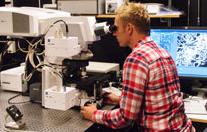
Meanwhile, colleague Carl Simonsson has used advanced light microscopy to demonstrate that a substance can be differently absorbed by the skin, depending on what it is mixed with. The findings may determine whether substances cause contact allergy.
“We have also been able to identify specific cells and proteins in the skin with which a contact allergen interacts. The results increase our understanding of the mechanisms behind contact allergy,” he says.
The principal barrier of the skin, the stratum corneum, helps to protects us from bacteria and viruses, but the organ is not adapted to deal with and prevent absorption of many of the chemicals that we are exposed to today.
Simonsson says using an advanced form of light microscopy known as two-photon microscopy makes it possible to follow substances absorbed into the skin.
The method not only allows us to see not only how well a substance is absorbed, it can also follow what happens to it, and the location in the skin that the substance eventually comes to.
“We have used two-photon microscopy to study a new type of ointment that it may be possible to use to improve the absorption, and thus the clinical effect, of certain drugs that are used on the skin,” he adds.
Leave a Reply