
An organism found in garden soil may provide the key to new "magic bullet" cancer treatments, British researchers have revealed.
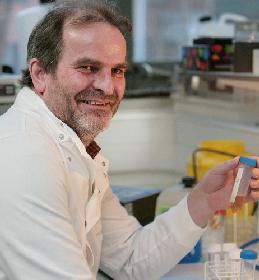 Spores from the bacteria, clostridium sporogenes, have the remarkable property that they multiply in solid cancer tumours – but nowhere else – when injected into the body, scientists say.
In the tumours they then produce an enzyme – which scientists hope could be used to develop cancer destroying therapies.
The discovery was reported yesterday to the conference of the Society for General Microbiology at York University, UK.
Scientists at Nottingham University and Maastricht University, the Netherlands, have been working together on the project.
They hope to begin testing treatments on cancer patients within two years.
The treatment involves the injection of a drug which is activated to destroy the cancer by the bacterial enzyme.
As part of the research, bacteria are being genetically altered to produce more enzymes.
Researcher Professor Nigel Minton, of Nottingham University, said: "Clostridia are an ancient group of bacteria that evolved on the planet before it had an oxygen-rich atmosphere and so they thrive in low oxygen conditions. When Clostridia spores are injected into a cancer patient, they will only grow in oxygen-depleted environments, i.e. the centre of solid tumours.
"This is a totally natural phenomenon, which requires no fundamental alterations and is exquisitely specific. We can exploit this specificity to kill tumour cells but leave healthy tissue unscathed."
He said: "This therapy will kill all types of tumour cell. The treatment is superior to a surgical procedure, especially for patients at high risk or with difficult tumour locations.
"A successful outcome could lead to its adoption as a frontline therapy for treating solid tumours. If the approach is successfully combined with more traditional approaches this could increase our chance of winning the battle against cancerous tumours."
Leave a Reply