
Babies that are slow to get growing in the womb face an increased risk of developing allergic diseases, researchers revealed yesterday.
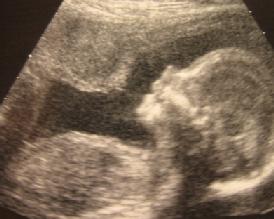 The size of a baby ten weeks into pregnancy seems to play a critical role in allergy risk, according to doctors in Aberdeen, Scotland.
A baby that is small at ten weeks of pregnancy – and stays small – faces an increased risk of developing asthma in childhood, according to the findings.
And a baby that enjoys a growth spurt after being small at ten weeks faces an increased risk of the allergic skin disease eczema.
In contrast, a baby that was large at ten weeks – but then slowed to normal size, seemed to enjoy protection against hay fever, the researchers found.
Part of the explanation may be that a child that is slow to develop early in pregnancy may have weaker lungs than others – helping to explain the asthma risk.
But the findings will also point researchers to clues about how the immune system develops.
The findings have been reported in the American Journal of Respiratory and Critical Care Medicine.
Researchers studied some 1500 pregnant women in Aberdeen Maternity Hospital and then checked the health of their children ten years later.
Some 927 families took part in the final research – and detailed studies were undertaken on 449 children. Children with asthma had been ten per cent smaller than average in the tenth week of pregnancy, they found.
Researcher Dr Steve Turner, of Aberdeen University, said: "Foetal size is not the sole explanation for asthma. Asthma can have a different natural history in different children, for example some grow out of their asthma whilst some develop asthma as they reach secondary school age.
"But our study does give a better understanding of when asthma first begins in the many children who have symptoms throughout childhood.
"It might also be a step towards the development of advice and care for women planning a pregnancy – although such advice is likely to be in line with current advice such as not smoking and following a healthy diet and lifestyle if you are planning on getting pregnant."
Am. J. Respir. Crit. Care Med. June 2 2011, doi:10.1164/rccm.201012-2075OC
Leave a Reply