
British researchers have made a breakthrough in the search to make donated blood safe from the brain disease that originated in animals, vCJD.
 Experts have developed a test that can detect tiny amounts of the particles that cause the disease, prions, in blood.
As well as testing donor blood, researchers say they may be able to use the test to work out the true extent of infection in the population.
The disease emerged in the 1980s after an epidemic of a new brain disease, bovine spongiform encephalopathy among cattle. That was thought to have been spread by the practice of using animals in cattle food.
Scientists then linked a new human brain disease, variant Creutzfeldt-Jakob disease, to the animal epidemic.
Current estimates suggest one in 4,000 people may be infected.
An initial study of the test with samples from nearly 200 people, including 21 with vCJD, found it accurately detected 15 of the cases – with no false detections.
The test has been developed by vCJD expert Professor John Collinge, of University College London, UK. Details are reported in The Lancet today.
Professor Collinge said: "We expect this research will lead to improved and earlier diagnosis for our patients and, with further development and testing, provide the means to screen donated blood for prion infection.
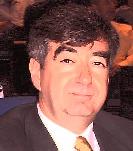 "Such a screening test would allow estimation of the number of silently infected healthy individuals in the UK and other BSE-exposed populations to more effectively guide public health risk management in future."
But writing in the journal Dr Luisa Gregori, of the US Food and Drug Administration, warns of potential dangers from trying to screen blood donors, suggesting that some might refuse screening for fear of being diagnosed.
She writes: "These practical issues need to be addressed before this assay or others like it can be considered for clinical use as a donor screening test."
Leave a Reply