
A woman’s monthly cycle may contribute to cancer risk, according to a new theory.
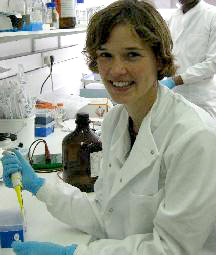 Dr Tanya Shaw and colleagues St George’s, University of London, England, are using funding from the Association for International Cancer Research (AICR) to investigate the damage caused to ovarian tissue when an egg is released and how it is then repaired.
One theory suggests that the injury and repair caused by ovulation may play an important role in causing cancer of the ovaries.
When an egg is released from the ovary during ovulation, it causes a ‘wound’ in the layer of tissue overlying the egg.
It is believed that this repeated injury and healing eventually causes the cells in the tissue which lines the ovarian surface to change and become cancerous in some women.
Giving weight to the hypothesis is the fact that reducing the number of ovulations a woman has during her lifetime, for example through the use of oral contraceptives, decreases her risk of ovarian cancer.
"By looking at pre-cancerous lesions and ovarian tumours, we hope to improve our understanding of the relationship between the injury, the healing process and ovarian cancer,” said Dr Shaw.
Dr Mark Matfield of AICR said: “Often, it’s only by backing research into new theories about cancer that we will really change our understanding of how different types of cancer are caused – and how we can treat or prevent them.”
Ovarian cancer is often called “the silent killer”, because it has few symptoms in the early stages, which means that many cases are diagnosed when the cancer is too advanced to be cured.
Worldwide, an estimated 125,000 women die of ovarian cancer each year.
Leave a Reply