
Scorpion venom could play a crucial role in improving the success of heart by-pass operations, British researchers have reported.
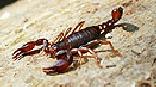 Scientists have found a toxin in the venom of the Central American bark scorpion that may play a key part in the healing process.
The toxin, margatoxin, may be able to help surgeons control the growth of cells that follows the grafting of a vein during a process known as neointimal hyperplasia, they report in the journal Cardiovascular Research.
The Leeds University team says the toxin is 100 times as potent as any other compound at controlling the healing process following a bypass.
Researcher Professor David Beech said: "It’s staggeringly potent. We’re talking about needing very few molecules in order to obtain an effect.
"There were a number of good blockers of this ion channel available to screen. Several compounds are developed from plants, and one comes from scorpion venom, but margatoxin was the most potent of all these compounds by a significant margin."
Although the same inflammation process is also found in diseases such as multiple sclerosis, the researchers say it is unlikely the toxin could be developed as a drug. But doctors might be able to spray it onto a vein before grafting.
The medical director of the British Heart Foundation Professor Peter Weissberg said the findings were "promising".
He said: "We won’t know if this approach will benefit patients undergoing bypass surgery until more research in undertaken in patients to establish its long term efficacy and safety. This is a good example of a substance that is dangerous in its natural form – a scorpion sting, having potential medicinal benefits if used appropriately."
He added: "Although veins make good bypass vessels for patients with coronary artery disease, they’re prone to narrow and block off in the years after the operation, so there is a definite need for a treatment that prevents that from happening."
Potent suppression of vascular smooth muscle cell migration and human neointimal hyperplasia by KV1.3 channel blockers. Alex Cheong; Jing Li; Piruthivi Sukumar; Bhaskar Kumar; Fanning Zeng; Kirsten Riches; Christopher Munsch; Ian C. Wood; Karen E. Porter; David J. Beech Cardiovascular Research 2010; doi: 10.1093/cvr/cvq305
Leave a Reply