
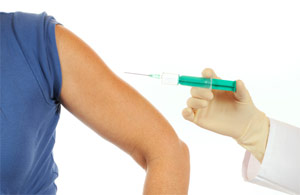
 The new cervical cancer vaccine is not encourage young women to have sex – in fact it is deterring them, researchers report today.
The vaccination against the human papillomavirus makes girls more aware of the risks of having sex, researchers have found.
A team based in Manchester, UK, investigated 12 to 13-year-old girls’ experiences of the human papillomavirus (HPV) vaccination to prevent cervical cancer. Previous surveys have focused mainly on parents’ views.
All 553 girls who took part were offered three doses of Cervarix, made by GlaxoSmithKline, who funded this study.
Many (79 per cent) of the girls agreed that vaccination reminded them of the risks of sexual contact. Nevertheless, 14 per cent thought they might take more sexual risks because they had been vaccinated.
Over three-quarters (77 per cent) had discussed their decision with parents. Of those whose parents refused vaccination, 42 per cent wanted to have it. Of those who were vaccinated, ten per cent did not want it.
More than half (54 per cent) said the vaccine was very important to them, but it was perceived as painful and the girls were exposed to "exaggerated rumours of serious adverse events and needle scares". Full results appear in the British Journal of Cancer.
Researchers Dr Loretta Brabin and colleagues write: "Girls of this age form their own views on HPV vaccination but parental support for vaccination remains important, especially for completing the three doses.
"By discussing the vaccine, parents can encourage their daughters to determine the importance and implications of HPV vaccination."
Dr Brabin added: "Interestingly, media suggestions that the vaccine could make girls more likely to start having sex at a younger age hadn’t affected them. In fact, the vaccine actually made them more aware of the risks of sex."
Dr Lesley Walker, of Cancer Research UK, said: "Despite the scare-stories, this research suggests that the HPV vaccine could make the majority of girls more cautious about sex.
"The HPV vaccine is an important step towards preventing cervical cancer in the UK but it will only be truly successful if uptake is high.
"It’s important that girls also get appropriate sex education so that they’re all aware of the risks of sex."
Brabin, L. et al. A survey of adolescent experiences of human papillomavirus vaccination in the Manchester study. The British Journal of Cancer, published online October 6, 2009.
Leave a Reply