
Pregnancy pain relief guidance published
Thursday December 13th, 2018
Women who need pain relief during pregnancy and while breast-feeding should rely on paracetamol so far as possible, new guidance says today.
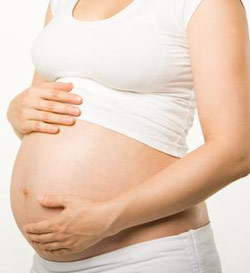 If possible, pregnant women should avoid all drugs during the first trimester – unless
they are needed to prevent harm, according to the Royal College of Obstetricians and Gynaecologists.
If possible, pregnant women should avoid all drugs during the first trimester – unless
they are needed to prevent harm, according to the Royal College of Obstetricians and Gynaecologists.
The college says that paracetamol has an “excellent safety profile” and should be the first line pain medication.
NSAIDs should not be taken after 30 weeks of gestation but are safe during breastfeeding, according to the guidance. They may be clinically indicated in the first trimester for conditions such as severe migraine, the college says.
It also highlights a distinction between codeine and dihydrocodeine, which is safe during breastfeeding when codeine is not.
It calls for women to take the lowest effective dose of any medication for the shortest possible period.
Dr Dina Bisson, the obstetrician who led the review, said: “It is absolutely essential that pain is managed appropriately during pregnancy and breastfeeding. Many women may develop headaches, lower back pain and pelvic pain during pregnancy and breastfeeding, while others may have chronic conditions, where pain management is necessary. If pain is not adequately managed, this can have a negative impact on a woman’s physical and mental well-being.
“Women should be encouraged to try non-medical treatments, such as adequate rest, hot and cold compresses, massage, physiotherapy and exercise. But if pain relief drugs are required, it is important that doctors and midwives are able to advise on appropriate medication and hopefully this review will be helpful.”
Dr Pat O’Brien, from the college, added: “It is also important, as this latest review shows, that women who are trying to conceive, or are already pregnant, should always check the mixture of ingredients in cough and cold remedies to avoid accidental overdose of paracetamol and any medication that contains caffeine.”
Antenatal and Postnatal Analgesia. Scientific Impact Paper No. 58. BJOG 13 December 2018; doi: 10.1111/1471-0528.15510
http://onlinelibrary.wiley.com/doi/10.1111/1471-0528.15510/full
Tags: Childbirth and Pregnancy | Pain Relief | Pharmaceuticals | UK News | Women's Health & Gynaecology
 Printer
friendly page
Printer
friendly page