
Circadian rhythm scientists receive Nobel Prize for Medicine
Tuesday October 3rd, 2017
The 2017 Nobel Prize in Physiology or Medicine has been awarded to three American scientists for their work on the 24-hour body clock.
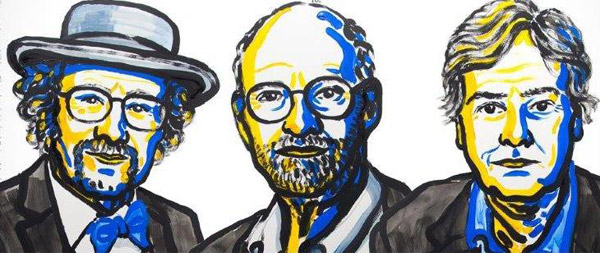 Jeffrey C. Hall, Michael Rosbash and Michael W. Young were cited "for
their discoveries of molecular mechanisms controlling the circadian rhythm",
it was announced yesterday (2 October 2017).
Jeffrey C. Hall, Michael Rosbash and Michael W. Young were cited "for
their discoveries of molecular mechanisms controlling the circadian rhythm",
it was announced yesterday (2 October 2017).
"Their discoveries explain how plants, animals and humans adapt their biological rhythm so that it is synchronized with the Earth’s revolutions,” said the Nobel Assembly at Sweden's Karolinska Institute.
“Using fruit flies as a model organism, this year’s Nobel laureates isolated a gene that controls the normal daily biological rhythm. They showed that this gene encodes a protein that accumulates in the cell during the night, and is then degraded during the day.
“Subsequently, they identified additional protein components of this machinery, exposing the mechanism governing the self-sustaining clockwork inside the cell."
Congratulating the team, Dr Michael Hastings, programme leader in circadian neurobiology, at the MRC Laboratory of Molecular Biology (Cambridge, UK), said: “This is fantastic news – and a well-deserved accolade for the US team.
“Circadian rhythms are a fundamental mechanism of life in all organisms – from fungi and blue-green algae to us humans. We’re continually finding ways in which they can have a profound influence on almost every aspect of our health.
“Many of us have experienced what happens when travel upsets our body clock and causes jetlag or how rotational shift work can sometimes cause far more serious and permanent effects.
“We already know that these rhythms can disrupt the way in which we react to disease and to drugs used to treat disease. This is why some drugs work better if taken at a certain time, and why some diseases can cause more distressing symptoms at particular times of the day.
“We’re now finding that circadian rhythms control many crucial cellular processes such as the way the body produces and eliminates proteins. When these processes are upset they can cause diseases such as dementia, and so understanding how the clock turns on and turns off protein production and clearance from the brain may give us new leads to combat these debilitating conditions.”
Seventy-two-year-old Hall spent most of his career at the Brandeis University in Waltham, Massachusetts, before retiring. Robash, aged 73, is still a faculty member there, while 68-year-old Young works at the Rockefeller University, New York.
Tags: General Health | North America | UK News | World Health
 Printer friendly page