
WHO calls for integrated care for older people
Monday October 2nd, 2017
The World Health Organisation has called for a co-ordinated and integrated approach in providing care for older people.
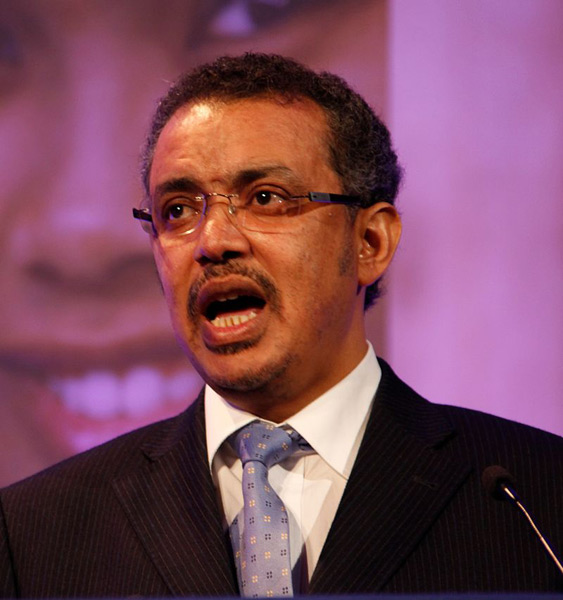 Dr Tedros Adhanom Ghebreyesus, director-general of WHO, speaking yesterday
(1 October 2017), on International Day of The Older Person, announced
its Guidelines on Integrated Care for Older People, recommending way
in which community-based services can help to prevent, slow or reverse
declines in physical and mental capacities among older people.
Dr Tedros Adhanom Ghebreyesus, director-general of WHO, speaking yesterday
(1 October 2017), on International Day of The Older Person, announced
its Guidelines on Integrated Care for Older People, recommending way
in which community-based services can help to prevent, slow or reverse
declines in physical and mental capacities among older people.
The guidelines also call for health and social care providers to co-ordinate their services around the needs of older people.
“By the year 2050, 1 in 5 people in the world will be aged 60 and older,” he said. “It’s our goal to ensure that all older people can obtain the health services they need, whoever they are, wherever they live.”
In a survey of 11 high-income countries, up to 41% of adults aged 65 and over said they had encountered problems with care co-ordination over the past two years.
Dr John Beard, WHO’s director of the Department of Ageing and Life, said the world’s health systems are not ready for older populations. Despite older people being more likely to experience chronic conditions and multiple conditions at the same time, today’s health systems tend to focus on the detection and treatment of individual acute diseases.
“Everyone at all levels of health and social care, from front-line providers through to senior leaders, has a role to play to help improve the health of older people,” he said.
“WHO’s new guidelines provide the evidence for primary care workers to put the comprehensive needs of older people, not just the diseases they come in to discuss, at the centre of the way they provide care.
“If health systems are to meet the needs of older populations, they must provide ongoing care focused on the issues that matter to older people – chronic pain, and difficulties with hearing, seeing, walking or performing daily activities. This will require much better integration between care providers.”
WHO says some countries are already introducing changes and are following WHO’s Global Strategy on Ageing and Health.
It says Brazil has implemented comprehensive assessments and expanded its services for older adults, while Japan has integrated long -term care insurance to protect people from the costs of care.
The Ministry of Health in Mauritius provides universal health coverage for older adults, including a network of health clubs and primary care clinics with more sophisticated services in hospitals, while France has set up a new WHO Collaborating Centre in Toulouse University Hospital, helping to advance research, clinical practice and training on healthy ageing.
Tags: Africa | Elderly Health | Europe | World Health
 Printer friendly page