
Training and tests could cut malaria drug use
Friday April 25th, 2014
Improved training for health workers in poor countries could massively cut the use of malaria drugs, British researchers say.
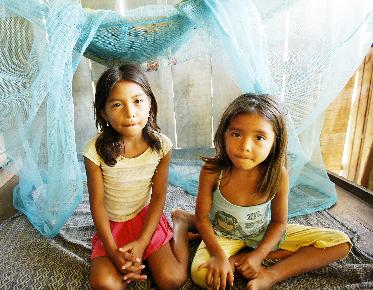 The
findings of the study from the London School of Hygiene & Tropical
Medicine, were revealed today for World Malaria Day.
The
findings of the study from the London School of Hygiene & Tropical
Medicine, were revealed today for World Malaria Day.
Researchers said malaria-hit countries need to ensure health workers have access to rapid diagnostic tests and improve training.
A study in Cameroon suggests this could halve rates of over-diagnosis of the disease.
Standard practice is to diagnose the disease based on symptoms - but the rapid tests allow clinicians to test blood for malaria parasites.
Researchers found that 84% of patients received a malaria drug they did not need when standard practice was used - but this was cut to 31% when clinicians underwent a comprehensive training programme about using rapid testing.
The findings are reported in The Lancet Global Health today.
Researcher Dr Virginia Wiseman said: "If we are serious about improving the targeting of malaria medicines by using rapid diagnostic tests, then there needs to be a far greater focus on behaviour change.
"This study, the first of its kind in Cameroon, highlights that health workers not only need training to diagnose and treat malaria, but most of all need the confidence to put what they learn into practice and to communicate more effectively with patients about why they are tested and that fever is not always caused by malaria."
Prof Wilfred Mbacham from the University of Yaoundé, Cameroon, said: "Rapid diagnostic tests are new technologies that can greatly assist nurses and doctors in making life-saving decisions at the point-of-care.
"Rather than do passive training in the use of rapid diagnostic tests, building confidence and providing communication training are key to accept a negative test for a patient with fever and to use other treatment options."
* A new World Health Organisation guide, launched today, will seek to encourage countries to plan for elimination of the disease.
Death rates from the disease have fallen by 42% this century - including a 49% reduction in Arica.
Some 26 countries are now listed as being close to eliminating the disease.
WHO director-general Dr Margaret Chan said: “Increased political commitment and the expansion of global malaria investments have saved some 3.3 million lives since 2000.
”Countries where malaria remains endemic now want to build on this success.”
The Lancet Global Health 25 April 2014 [abstract]
Tags: Africa | UK News | World Health
 Printer friendly page