
SIGN UP FOR UPDATES!
Sign up for Englemed updates from TwitterSign up for Englemed updates from Facebook
ENGLEMED
Contact Englemed
Our contact email address.
We can provide a specialist, tailored health and medical news service for your site.
Click here for more information
RSS graphic XML Graphic Add to Google
About Englemed news services - services and policies.
Englemed News Blog - Ten years and counting.
Diary of a reluctant allergy sufferer - How the British National Health Service deals with allergy.
BOOKS AND GIFTS THIS WAY!
BookshopFor books on women's health, healthy eating ideas, mental health issues, diabetes, etc click here
SEARCH THIS SITE
Google

WWW Englemed
Copyright Notice. All reports, text and layout copyright Englemed Ltd, 52 Perry Avenue, Birmingham UK B42 2NE. Co Registered in England No 7053778 Some photos copyright Englemed Ltd, others may be used with permission of copyright owners.
Disclaimer: Englemed is a news service and does not provide health advice. Advice should be taken from a medical professional or appropriate health professional about any course of treatment or therapy.
FreeDigitalPhotos
www.freedigitalphotos.net
FreeWebPhotos
www.freewebphoto.com
FROM OUR NEWS FEEDS
Elite football players 'more likely to develop dementia'
Fri March 17th - Elite male footballers are more likely to develop dementia than the general population, according to a Swedish study published today. More
RECENT COMMENTS
On 09/10/2020 William Haworth wrote:
How long is recovery time after proceedure... on Ablation cuts atrial fibrillat...
On 08/02/2018 David Kelly wrote:
Would you like to write a piece about this to be i... on Researchers unveil new pain re...
On 23/10/2017 Cristina Pereira wrote:
https://epidemicj17.imascientist.org.uk/2017/06/21... on HIV breakthrough - MRC...
On 12/09/2017 Aparna srikantam wrote:
Brilliant finding! indeed a break through in under... on Leprosy research breakthrough...
On 01/07/2017 Annetta wrote:
I have been diagnosed with COPD for over 12 years.... on Seaweed plan for antimicrobial...
BOOKS ON WOMEN'S HEALTH
guide to breast disorders guide to womb disorders guide to menopause Complete Women's Health: from The Royal College of Obstetricians and Gynaecologists For books and family gift ideas click here
OTHER NEWS OF INTEREST
WOMEN'S HEALTH NEWS FEED
RSS graphic XML Graphic
ENGLEMED HEALTH NEWS

Night-shades may boost female health

Monday January 10th, 2011

Women who sleep with eye-shades may be helping to reduce their risk of breast cancer, researchers have reported.
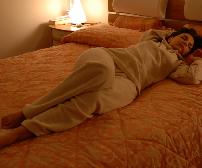
Those who fall asleep with the television and bedroom lights on may be aggravating their risk, according to a new study.

Researchers say the latest findings confirm fears raised from studies of night-working nurses that excessive exposure to light while sleeping may increase risk.

A study of some 1,670 women found sleeping with the lights on and without eye-shades was linked to a 22 per cent increased risk of developing breast cancer.

The study was conducted by the University of Haifa, Israel.

Researcher Professor Abraham Haim said the sleep hormone melatonin might play a role in helping prevent cancer. The hormone is produced when the body is in darkness.

He said: "Accelerating urbanisation worldwide and rising living standards have meant that electricity has become more accessible and affordable for wide segments of the population, resulting in increased light-at-night exposure both within peoples’ houses and in the streets outside their windows."

He added: "Simple solutions exist, such as the installation of window blinds in the bedroom, and also by the use of eye covers while sleeping."

Journal editor Professor Michael Smolensky said: “The novelty of the present study lies in the fact that this is the first large-scale, case-control study of the general population which has identified a significant positive association between bedroom light and ambient night-time light – or light pollution - levels with breast cancer risk.

"This study provides evidence that the relative risk of breast cancer appears to increase in more illuminated sleeping environments, leading us to conclude that the modern human sleeping habitat with its high light-at-night levels can and should be considered a significant breast cancer risk."

Chronobiology International February 2011, Vol. 28, No. 1 , Pages 76-80

Tags: Asia | General Health | Women’s Health & Gynaecology

Printer friendly page Printer friendly page

CATEGORIES