
SIGN UP FOR UPDATES!
Sign up for Englemed updates from TwitterSign up for Englemed updates from Facebook
ENGLEMED
Contact Englemed
Our contact email address.
We can provide a specialist, tailored health and medical news service for your site.
Click here for more information
RSS graphic XML Graphic Add to Google
About Englemed news services - services and policies.
Englemed News Blog - Ten years and counting.
Diary of a reluctant allergy sufferer - How the British National Health Service deals with allergy.
BOOKS AND GIFTS THIS WAY!
BookshopFor books on women's health, healthy eating ideas, mental health issues, diabetes, etc click here
SEARCH THIS SITE
Google

WWW Englemed
Copyright Notice. All reports, text and layout copyright Englemed Ltd, 52 Perry Avenue, Birmingham UK B42 2NE. Co Registered in England No 7053778 Some photos copyright Englemed Ltd, others may be used with permission of copyright owners.
Disclaimer: Englemed is a news service and does not provide health advice. Advice should be taken from a medical professional or appropriate health professional about any course of treatment or therapy.
FreeDigitalPhotos
www.freedigitalphotos.net
FreeWebPhotos
www.freewebphoto.com
FROM OUR NEWS FEEDS
Elite football players 'more likely to develop dementia'
Fri March 17th - Elite male footballers are more likely to develop dementia than the general population, according to a Swedish study published today. More
RECENT COMMENTS
On 09/10/2020 William Haworth wrote:
How long is recovery time after proceedure... on Ablation cuts atrial fibrillat...
On 08/02/2018 David Kelly wrote:
Would you like to write a piece about this to be i... on Researchers unveil new pain re...
On 23/10/2017 Cristina Pereira wrote:
https://epidemicj17.imascientist.org.uk/2017/06/21... on HIV breakthrough - MRC...
On 12/09/2017 Aparna srikantam wrote:
Brilliant finding! indeed a break through in under... on Leprosy research breakthrough...
On 01/07/2017 Annetta wrote:
I have been diagnosed with COPD for over 12 years.... on Seaweed plan for antimicrobial...
ASTHMA & ALLERGY BOOKS
Clearing the air: An Assessment of Asthma and Indoor Allergens ABC of Asthma For more books click here
ALLERGY NEWS
ALLERGY RSS FEEDS
RSS graphic XML Graphic
ENGLEMED HEALTH NEWS

Daily inhalers questioned

Tuesday February 15th, 2011

Children treated with corticosteroid inhalers for asthma might safely revert to using them on an emergency basis, experts said today.
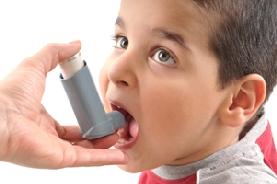
Reducing the use of the drugs might also help children avoid the side effects - of reduced growth, according to a study published in The Lancet.

Usually children are told to use their inhalers twice daily to prevent symptoms of asthma.

The latest analysis suggests the risk of attacks is only slightly increased when children simply rely on inhalers for emergencies.

However the small number of children in the study, 288, is likely to cause concern because of the risk of dangerous complications of attacks.

The research took place at the University of Arizona, Tucson, USA, and involved the use of placebos to replace the corticosteroid beclomethasone - so that children thought they were taking daily inhalations with emergency treatments.

One group of children simply used the emergency drug albuterol, <!known as >a short-acting beta agonist, without corticosteroids. These suffered a 23 per cent rate of treatment failure.

This compared with an 8.5 per cent failure rate among children who also had the corticosteroid in their rescue treatment - and a three per cent failure rate for those who did not have placebos.

Researcher Professor Fernando Martinez says using corticosteroids only for "rescue" treatment could be an alternative approach for mild, persistent asthma.

Writing in the journal Dr William Checkley, of Johns Hopkins University, Baltimore, Maryland, USA, writes: "The results of this trial, however, suggest that step-down from daily inhaled corticosteroids to such treatment as rescue in combination with rescue short-acting beta agonists could be an effective step-down strategy for patients with mild persistent asthma."

The Lancet February 15 2011

Tags: Allergies & Asthma | Child Health | North America | Pharmaceuticals

Printer friendly page Printer friendly page

CATEGORIES