
Midwives challenged on obesity
Wednesday July 21st, 2010
Midwives may not be able to solve the problems caused by growing numbers of overweight women having babies, an expert warned today.
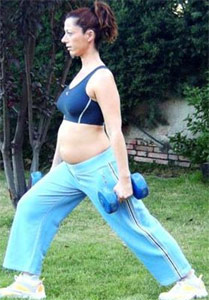 A
new study links women being overweight to a risk of premature birth and
babies being excessively small.
A
new study links women being overweight to a risk of premature birth and
babies being excessively small.
The report from Canada in the British Medical Journal follows increasing concern about the number of pregnant women who are overweight - including the publication of official guidelines on exercise in Britain.
But Janet Fyle, an adviser at the Royal College of Midwives, said: "Of course midwives know that they need to provide women with the information and support about eating healthily and exercise in pregnancy.
"We can tell women about the right diet and exercise, but this has to be done within the context of their lives. Can they afford the right food? Can they get access to gyms or swimming pools? There are social contexts to consider and one size does not fit all.
"There are examples of good practice out there and maternity services providers should be looking to these to follow and emulate them."
Dr Sarah McDonald of McMaster University, Ontario, Canada, and her team investigated the link between overweight mothers and premature birth or low birth weight.
Figures were taken from 84 studies around the world, involving 1,095,834 women. Premature birth was defined as before 37 weeks' gestation, and low birth weight as less than 2,500 grams.
The overall risk of premature birth was found to be similar in overweight and obese women and women of normal weight. But the risk of induced premature birth was 30 per cent higher.
The risk of having a low birth weight infant was lower among overweight and obese women, but this decrease was greater in developing countries than in developed countries.
* Baby death rates in the UK continue to fall, according to a major analysis published today.
The latest figures, from 2008, put the rate at 7.5 per 1,000 births.
This is down from 8.3 per 1,000 births in 2000. Details are published by the Centre for Maternal and Child Enquiries.
Death rates of twins have also fallen. But rates vary widely between regions of the UK, the report warns. This may be due to reporting differences, or different risk profiles of women and babies.
Rates remain higher for women under 25 years of age and over 40 years, and women living in more deprived areas. Mothers in the most deprived areas are 1.7 times more likely to have a stillbirth and 2.5 times more likely to experience a neonatal death, than those in the least deprived areas.
Other factors that increase the risk include belonging to a minority ethnic group, obesity, and smoking.
Increasing numbers of stillbirths are leading to post-mortem investigations. The rate of "unexplained" stillbirths is currently lower than ever, at 23 per cent, the researchers say.
Richard Congdon of the Centre for Maternal and Child Enquiries said: "The substantial variations between the different parts of the UK and between people depending on factors such as lifestyle and ethnicity, show that significant further improvement is possible."
Professor Sir Sabaratnam Arulkumaran of the Royal College of Obstetricians and Gynaecologists added: "The new recommendations, if followed by Trusts, will help health care professionals to build a clearer picture as to why such tragic deaths sometimes occur."
And Louise Silverton, of the Royal College of Midwives, said the health service could not "rest on its laurels", even though the improvements showed things moving in the right direction.
She said: "The report also shows the need to keep pushing the public health message about the effects of issues such as smoking and obesity.
"The regional variations are a real concern and we need to pin down what is causing this. The report also highlights one of the real tragedies of health inequalities, that those in the most deprived areas are adversely affected."
Tags: Child Health | Childbirth and Pregnancy | Diet & Food | Fitness | North America | Nursing & Midwifery | Women’s Health & Gynaecology
 Printer friendly page