
The “immunological memory” of common childhood vaccines could provide a basis for new cancer treatments, according to a research team in Finland.
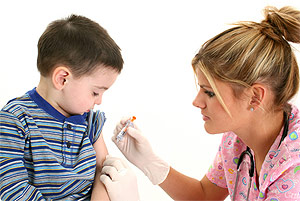 The new research from Professor Vincenzo Cerullo of the University of Helsinki, and colleagues, shows how this pre-immunisation can be used to boost cancer treatment.
They found that animals that were pre-immunised with an ordinary vaccine, such as the tetanus virus, responded better to treatment for an engrafted cancerous tumour.
The vaccinated animals were treated with a new hybrid viral platform called PeptiCRAd (Peptide-coated Conditionally Replicating Adenovirus) which combines an oncolytic Adenovirus and a peptide vaccine. This led to a dramatic improvement in their immune response to the tumour, compared with unvaccinated animals.
Professor Cerullo believes that this approach can be very easily translated into clinical trials, as it relies on pre-existing immunity of vaccines included in national vaccination programs worldwide.
“This method has potential to have a significant impact on current immunotherapy protocols,” he says.
Details were published in Cancer Research. The authors explain that therapeutic cancer vaccines generate an anti-tumour response more similar to a primary than a secondary immune response. In order to convert this into a secondary response, the team developed their hybrid tumour-pathogen therapeutic cancer vaccine.
Professor Cerullo says: “Since their introduction, the vaccines have made one of the greatest contribution to public health, with the eradication of common deadly infections such as smallpox. We thought that they could do even more and help our fight with the cancer.
“We decided to modify the well-established PeptiCRAd platform by adding another set of peptides derived from pathogens, which patients have been vaccinated for e.g. tetanus or diphtheria,” says Cerullo.
Co-author Dr Sara Feola adds: “The main idea is to take advantage of the pre-existing pathogen-specific immunological memory present in the worldwide population of vaccinated individuals. This boosts the anti-tumour response, directing pre-existing memory T cells towards the tumour.”
Tahtinen, S. et al. Exploiting the pre-existing immunity to enhance oncolytic cancer immunotherapy. Cancer Research 27 February 2020; doi: 10.1158/0008-5472.CAN-19-2062
https://cancerres.aacrjournals.org/content/early/2020/02/27/0008-5472.CAN-19-2062
Leave a Reply