
There is a significant link between eating “ultra-processed” food and the risk of cancer, according to a major study reported today.
 French researchers studied the diets of more than 100,000 adults, linking their findings to their health records.
The findings suggest that risk of cancer increases with intake of ultraprocessed food.
Experts from Paris 13 University, France, carried out the study. They explain that "ultra-processed foods are often characterised by lower nutritional quality and the presence of additives, substances from packaging in contact with food, and compounds formed during production, processing, and storage".
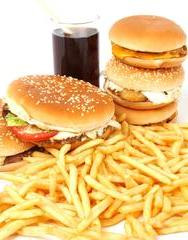
They define ultra-processed foods as including packaged baked goods and snacks, fizzy drinks, sugary cereals, ready meals and reconstituted meat products. These are often high in sugar, fat, and salt, but lacking in vitamins and fibre. They are thought to account for up to 50% of total daily energy intake in several developed countries.
The analysis showed that ultra-processed food intake was associated with increased overall cancer risk. For every extra 10% of the diet consisting of ultraprocessed food, the overall cancer risk increased by 12%, and the breast cancer risk by 11%. There was no link with prostate and colorectal cancer.
Writing in the BMJ today (15 February), the authors say: "To our knowledge, this study is the first to investigate and highlight an increase in the risk of overall – and specifically breast – cancer associated with ultra-processed food intake."
They point out: "Further studies are needed to better understand the relative effect of the various dimensions of processing (nutritional composition, food additives, contact materials, and neoformed contaminants) in these associations.
"If confirmed in other populations and settings, these results suggest that the rapidly increasing consumption of ultra-processed foods may drive an increasing burden of cancer in the next decades."
Fiolet, T. et al. Consumption of ultra-processed foods and cancer risk: results from NutriNet-Sante prospective cohort. BMJ 15 February 2018; doi: 10.1136/bmj.k32 [abstract]
Leave a Reply