
Vaping could make people vulnerable to pneumonia, according to a new analysis based on laboratory research.
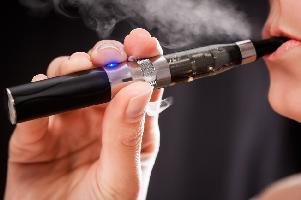 The findings will raise questions about vaping which won NHS approval earlier this week as being 20 times as safe as cigarette smoking.
Professor Jonathan Grigg and his team at Queen Mary University of London, UK, explain that e-cigarette vapour contains free radicals that can trigger oxidative stress in airway cells. This oxidative stress raises the expression of platelet-activating factor receptor, which is used by pneumococcal bacteria to attach to host cells.
The team investigated whether e-cigarette vapour would increase this adhesion. They tested the activity of platelet-activating factor receptor in a group of seven non-vaping adults, and in ten adults before and five minutes after vaping.
This showed that the groups were similar before vaping, but that five minutes after vaping, nasal platelet-activating factor receptor expression was increased. The effect is similar to that of traditional cigarette smoke or particulate matter from fossil-fuel pollution, the researchers say.
Tests on murine airway cells showed that both nicotine-containing and nicotine-free e-cigarette vapour increased pneumococcal adhesion.
In the European Respiratory Journal today (8 February), the authors write: "This study suggests that e-cigarette vapour has the potential to increase susceptibility to pneumococcal infection."
Professor Grigg says: "Pneumococcal bacteria can exist in our airways without causing illness. However, in some cases, they can invade the lining cells causing pneumonia or septicaemia. We know that exposure to traditional cigarette smoke helps these bacteria stick to airway lining cells, increasing the risk of infection. We wanted to see whether or not e-cigarettes might have the same effect.
"Some people may be vaping because they think it is totally safe, or in an attempt to quit smoking, but this study adds to growing evidence that inhaling vapour has the potential to cause adverse health effects. By contrast, other aids to quitting such as patches or gum do not result in airway cells being exposed to high concentrations of potentially toxic compounds."
* Researchers from Norwich Medical School, Norfolk, UK, backed the NHS approach today, suggesting it should work with reputable vape shops to help smokers to give up tobacco.
They report their study of the shops in the International Journal of Environmental Research and Public Health.
They found that shop assistants provided “effective behavioural support” whilst customers enjoyed their informal, social atmosphere.
Miyashita, L. et al. E-cigarette vapour enhances pneumococcal adherence to airway epithelial cells. European Respiratory Journal 8 February 2018; doi: 10.1183/13993003.01592-2017 [abstract]
Leave a Reply